An Introduction to Nutrition in the Nutrition Course
Learn to design balanced, nutritious, tasty diets by life stage, read nutrition labels, plan for weight loss and exercise, and help prevent common diseases.
Watch Video For Onlinecourses55
|
2025-01-19

Energy in Nutrition: Key Insights for a Healthier Life Every Day
Understanding your body’s energy needs is key for dietary planning. Check out a course that educates you on metabolic functions and their links to nutritional intake for everyday vitality.
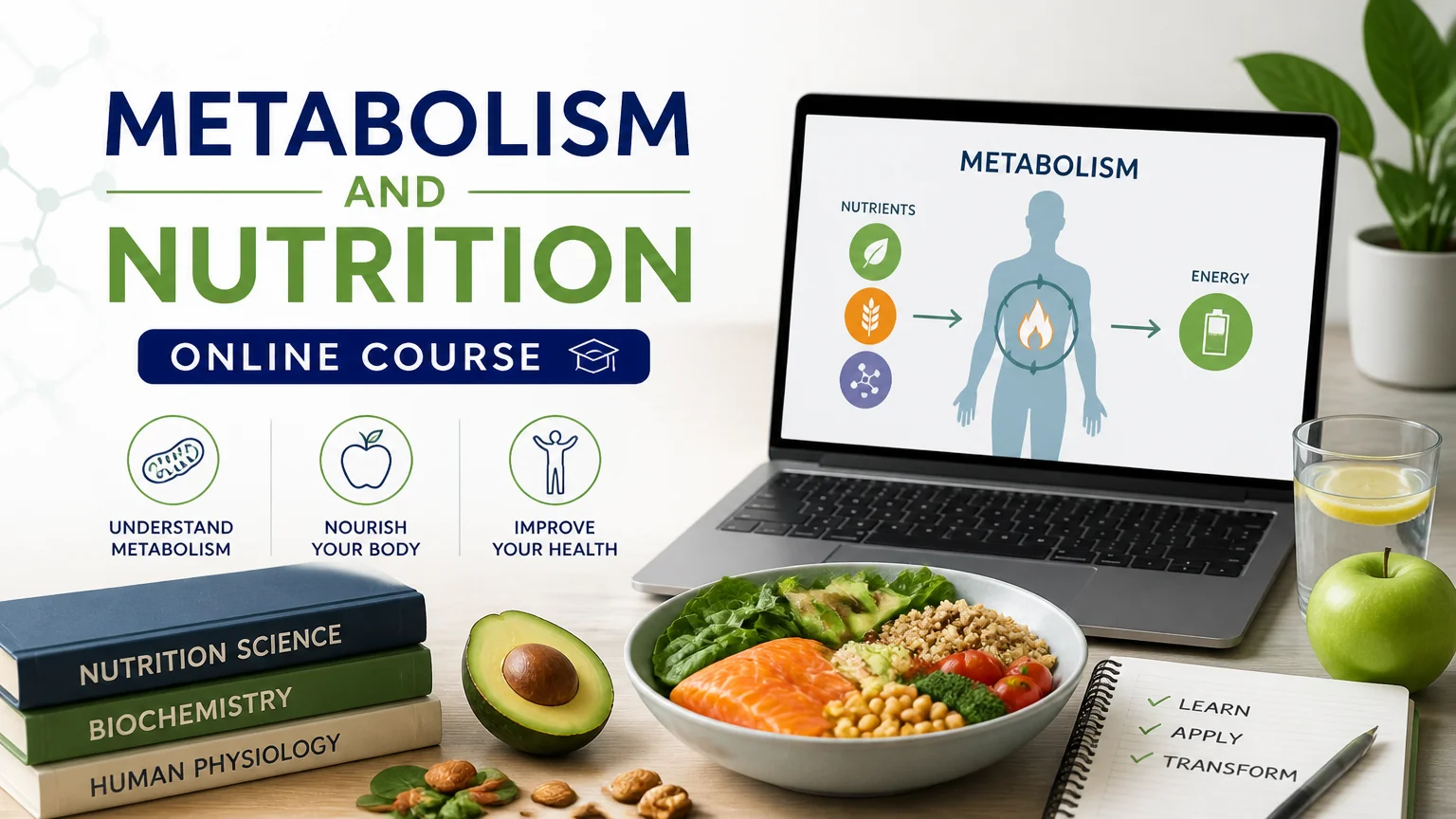
Energy can be acquired and transformed in various ways, within the human body there is a complex and efficient structure that allows energy to be obtained through the decomposition of food. For this purpose, the well-known metabolic function comes into play, where the metabolism is responsible for distributing energy in various processes, according to the needs of the organism.
Within these processes, we find the anabolic function, which, by definition, would be the function of building. This function is the one that allows us to use energy to strengthen, repair and create around our needs. Thus, without energy it would be impossible to perform this function, which is what ensures that we can continue to function as a system.
Another function related to energy is the catabolic function, which refers to the function of destroying, so it is the antagonist of the anabolic function. The catabolic function allows to balance the anabolic function, in a compensation system that helps the constant improvement of the organism.
Do you want to know more about holistic nutrition?
Do you prefer learning by watching and listening? Expand your knowledge with these free videos related to this topic.
Learn to design balanced, nutritious, tasty diets by life stage, read nutrition labels, plan for weight loss and exercise, and help prevent common diseases.
Watch VideoLearn what nutrients are, how macronutrients and micronutrients are classified, functions, food components and groups, tips for a healthy, balanced diet.
Watch VideoLearn what proteins and amino acids are, their functions and biological value, age-based requirements, and the health risks of deficiency or excess in detail.
Watch VideoSearch
Popular searches