For Onlinecourses55
|
2026-10-27
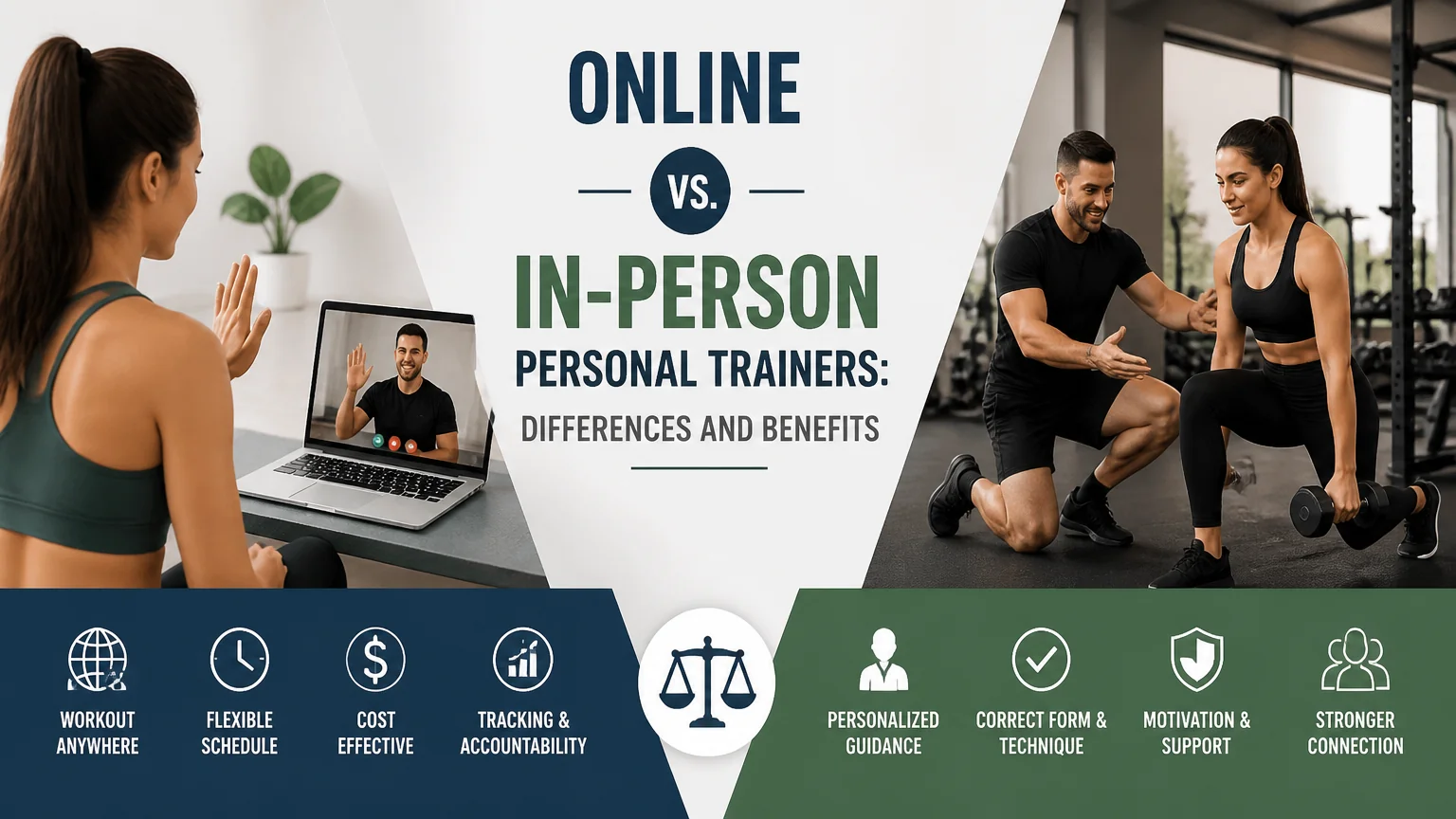
Online vs. in-person personal trainers: differences and benefits - personal trainer
Consider exploring the differences between in-person and remote guidance options in a training program for personal coaching to find what suits your lifestyle best.
Choosing between a professional who leads sessions in person or someone who does so remotely is an increasingly common decision. Both options aim for the same goal: to improve physical fitness, health, and performance. However, the way they work, communication, adaptation, and the user experience vary. In this article, we’ll explore how each method works, their differences, and the main benefits so you can make an informed decision based on your needs and lifestyle.
In in-person sessions, the trainer is physically with you during workouts. This allows for immediate technique correction, real-time adjustments, and direct supervision of your effort. Routines are typically designed based on the equipment available in the gym or training space, and the trainer can intervene instantly if they detect errors in posture or execution.
Remote training relies on digital tools: video calls, apps, personalized programs, and follow-up via messaging or email. The trainer creates plans tailored to your goals and makes adjustments based on your reports, photos, or videos. Communication can be asynchronous (messages and periodic updates) or in real time, depending on the service you sign up for.
Supervision: In-person training allows for immediate correction; online training relies on resources such as videos and delayed feedback.
Schedule flexibility: The online format typically offers greater freedom to schedule sessions at various times.
Accessibility: With an online trainer, you can train from anywhere, while in-person training requires travel.
Social interaction: face-to-face interaction creates a more direct and motivating connection in many cases; online sessions can feel more impersonal if communication isn’t handled well.
Cost: In general, remote services tend to be more affordable due to the absence of travel and facility rental costs.
Real-time customization: An in-person trainer can adjust weights, reps, and technique instantly; an online trainer does so based on the information the client provides.
In-person training offers a direct experience that many people value. Having someone observe you in the moment reduces the risk of injury from poor technique and helps maximize each repetition. Additionally, physical presence facilitates motivation: feeling that someone is there to support you, correct your form, and celebrate your progress can improve adherence to the program.
Other advantages include immediate access to gym equipment and the ability to create a more structured routine. For those seeking rehabilitation or complex technical training (such as Olympic lifts), close supervision is key to progressing safely and efficiently.
The main strength of remote training is convenience. You can train at home, in a park, or while traveling without losing continuity. This makes it easier to maintain a routine in lives with changing schedules or responsibilities that make it difficult to attend a gym regularly.
The online format also fosters autonomy: you learn to manage your sessions, prepare your equipment, and take responsibility for sticking to your plan. Additionally, it’s often more affordable, allowing access to longer programs or professionals with specializations that would otherwise be costly.
Thanks to technology, many online services include continuous tracking via apps that record progress, offer reminders, and adjust plans based on the data you enter, which can result in a personalized and scalable experience.
Objective: If your goal requires precise technique or rehabilitation, the in-person option is usually more appropriate. If you’re looking to improve habits, lose weight, or stay active, the online format may be sufficient.
Budget: Determine how much you want to invest. In-person training usually costs more due to time and logistics, while online options offer more affordable alternatives.
Time availability: If your schedule is irregular or you travel frequently, remote training offers greater flexibility.
Preference for interaction: Some people perform better with direct supervision, while others feel more comfortable training at their own pace.
Access to equipment: assess whether you have what you need at home or if you can access a gym. An online trainer can design plans with minimal equipment, but this limits certain goals.
Clearly communicate your goals, limitations, and medical history.
Ask for explanations of the technique and for corrections until you feel confident in the movements.
Request variations for when you can’t make it to the gym, so you can maintain consistency outside of sessions.
Maintain open communication: feedback on what works for you and what doesn’t will help personalize your plan.
Record and share data accurately: weight, measurements, photos or videos of your form, and how you feel after workouts.
Set a fixed schedule and a suitable space for training that helps you focus.
Ask for supplementary resources: video tutorials, lists of alternative exercises, and recommendations for affordable equipment.
Look for professionals who offer regular follow-ups and quick responses to help you stay on track.
There is no one-size-fits-all answer: the decision depends on your goals, budget, lifestyle, and personal preferences. In-person training provides immediate feedback and technical correction, ideal for goals that require high precision. The remote option offers flexibility, lower cost, and autonomy, convenient for those who need to adapt their training to complicated schedules. Honestly evaluating your priorities and trying both formats for short periods can help you find the combination that works best. It’s also possible to mix both modalities: occasional in-person sessions for technique and online follow-up for continuity, thus achieving a balance between supervision and convenience.
Search
Popular searches