For Onlinecourses55
|
2026-10-25
Psychological consequences of harassment for the victim and the silent bystander - sexual harassment work
Recognizing the psychological impact of bullying is essential for healing. Learn about resilience through our supportive training on workplace harassment recovery strategies tailored for your environment.
Bullying, in any of its forms (school, workplace, cyberbullying), is a social problem that transcends mere interpersonal conflict. Its effects, especially at the psychological level, can be devastating both for the direct victim and for those who witness the situation without intervening, the so-called "silent witnesses." Understanding these consequences is crucial for promoting prevention, early intervention, and support for those who suffer from or witness this type of violence.
Victims of bullying experience a wide range of psychological aftereffects that can persist for years, even after the bullying has ended. These consequences vary in intensity depending on the duration, severity, and context of the bullying, as well as the victim's personality and coping resources.
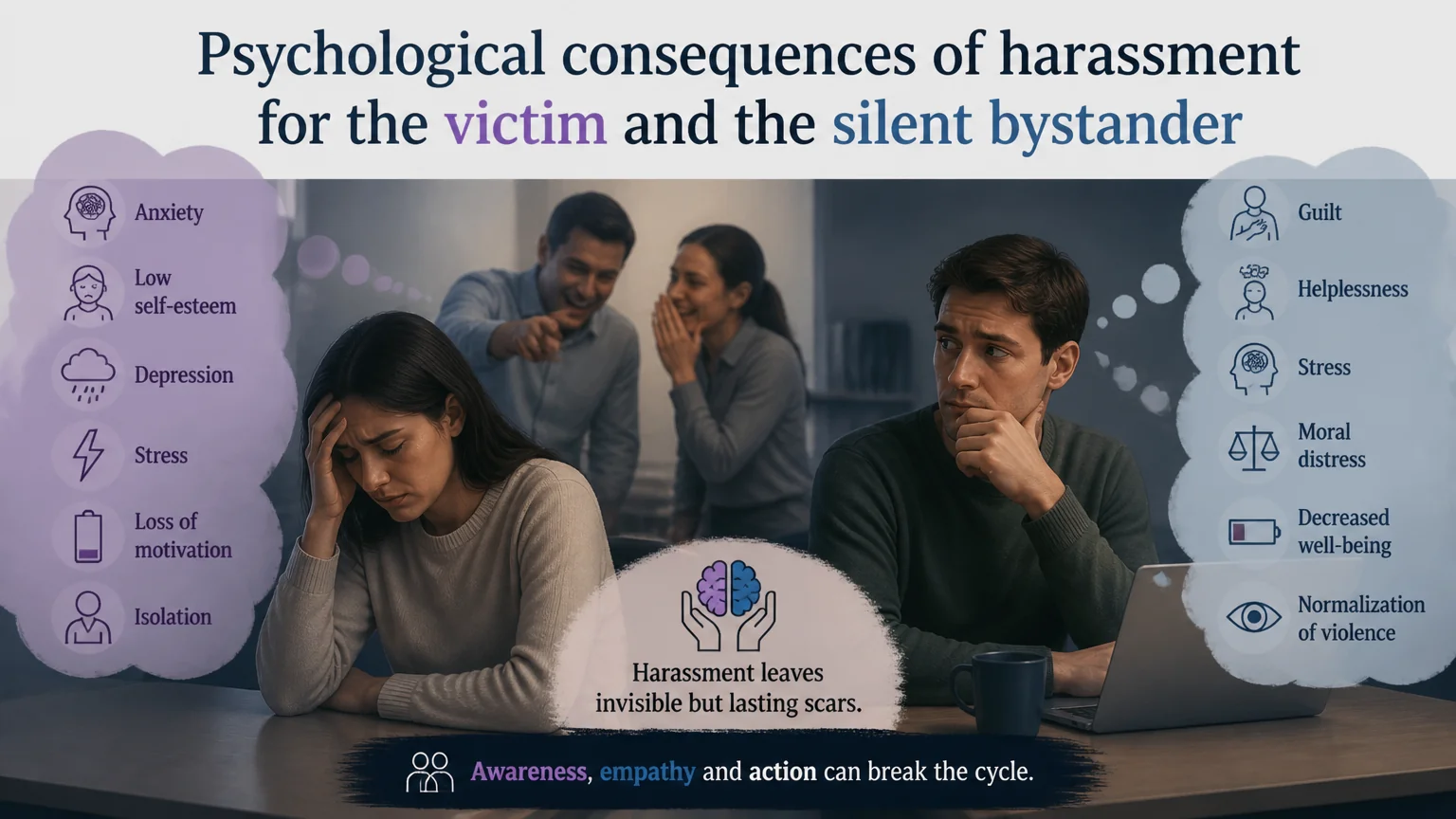
Depression and anxiety are two of the most common consequences of bullying. The victim feels constantly threatened, humiliated, and isolated, which can trigger feelings of deep sadness, hopelessness, lack of motivation, and even suicidal thoughts. Anxiety manifests as excessive worry, constant fear, irritability, and difficulty concentrating. The victim may experience panic attacks and avoid situations that remind them of the bullying.
Bullying undermines the victim's self-esteem. Constant criticism, humiliation, and personal attacks lead them to doubt their worth, feel inferior, and develop a negative self-image. In addition, the victim may feel guilty for not having been able to stop the bullying or for believing they somehow provoked it, even when this is not true. This irrational guilt further feeds their low self-esteem and hinders recovery.
In cases of severe or prolonged bullying, the victim may develop Post-Traumatic Stress Disorder (PTSD). PTSD is characterized by re-experiencing the traumatic event through flashbacks, nightmares, and intrusive thoughts. The victim avoids situations that remind them of the bullying, experiences hypervigilance (being constantly on alert for possible threats), and has difficulty falling asleep. PTSD can significantly interfere with the victim's daily life and require specialized psychological treatment.
Bullying can disrupt the victim's normal sleep and eating patterns. They may experience insomnia, nightmares, difficulty falling asleep, or oversleeping. Regarding eating, some victims lose their appetite and lose weight, while others turn to food as a way to cope with stress and anxiety, which can lead to weight gain and related health problems.
It is often forgotten that bystanders of bullying also suffer significant psychological consequences. Witnessing a bullying situation without intervening can generate feelings of guilt, helplessness, fear, and anxiety. Complicit silence can have a negative impact on the mental health and quality of life of bystanders.
Bystanders may feel guilty for not having done anything to stop the bullying. They wonder if they could have helped the victim and regret not having acted. They may also feel helpless when witnessing the situation and not knowing how to intervene safely and effectively. These feelings can generate frustration, sadness, and resentment.
Bystanders may experience fear of becoming victims themselves if they intervene to help the victim. They may fear retaliation from the bully or being excluded by their peers. This fear can generate anxiety and lead bystanders to avoid situations in which they might witness bullying again.
Repeated exposure to bullying can lead to desensitization and the normalization of violence. Bystanders may begin to perceive bullying as common and acceptable, which can negatively affect their moral and social development. They may become less empathetic and less likely to intervene in situations of injustice.
It is essential to take measures to prevent and address bullying at both the individual and social levels. Early intervention is crucial to minimize the psychological consequences of bullying for victims and bystanders.
Both victims and bystanders of bullying can benefit from psychological support. Therapy can help victims overcome the trauma, rebuild their self-esteem, and develop healthy coping strategies. Bystanders can receive support to manage their feelings of guilt, fear, and anxiety, and to learn how to intervene in a safe and effective way.
It is essential to foster a culture of respect and empathy in schools, workplaces, and society in general. This involves educating people about bullying, promoting tolerance and inclusion, and encouraging individuals to stand up for those who are victims of bullying.
It is important to report bullying to the appropriate authorities and seek professional help for both the victim and the bully. Reporting can help stop the bullying and prevent it from happening again. Professional help can assist the victim in recovering from the trauma and help the bully change their behavior.
Search
Popular searches