For Onlinecourses55
|
2026-09-30
For Onlinecourses55
|
2026-09-30
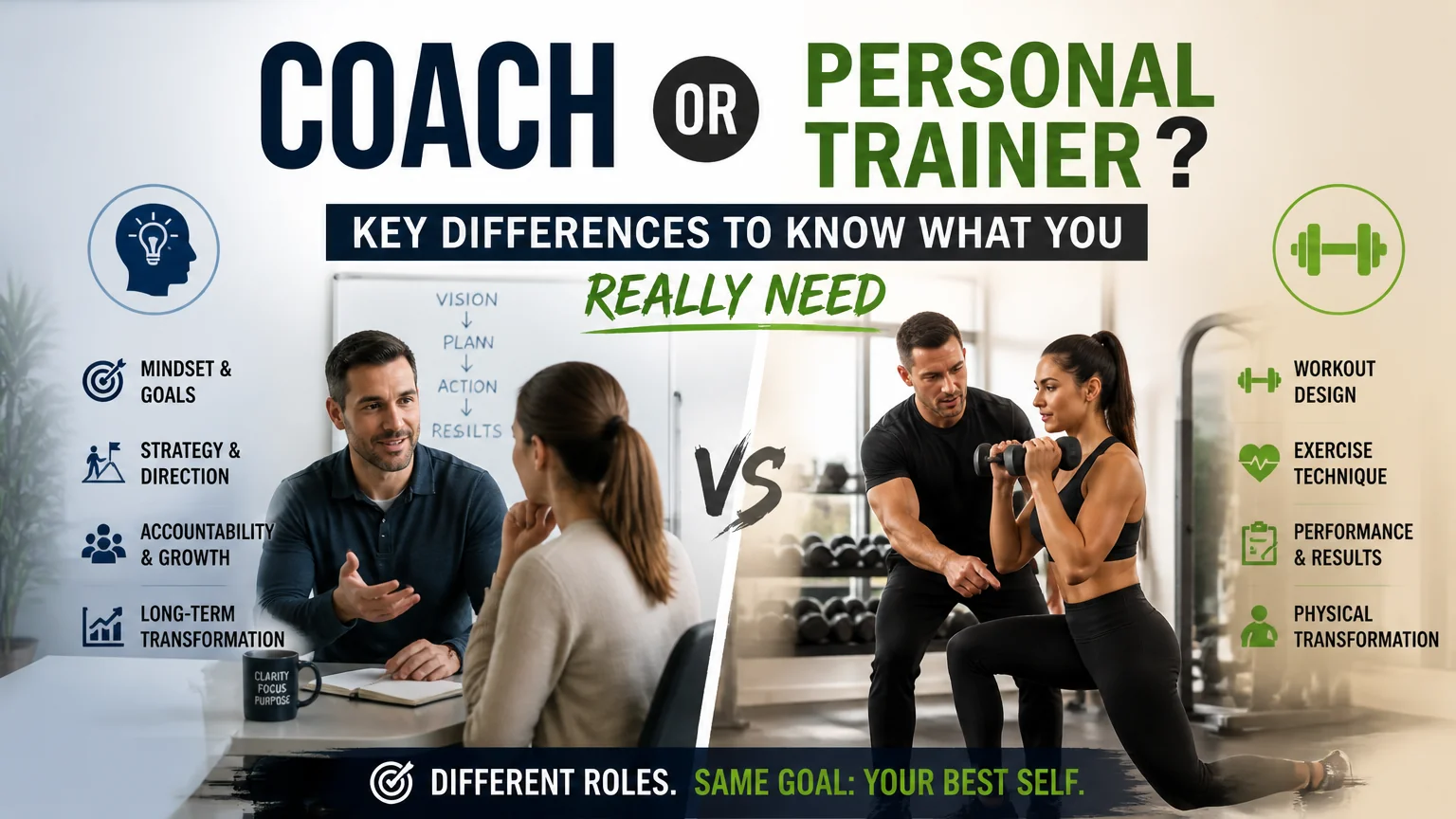
Coach or personal trainer?: key differences to know what you really need - sports coach
Selecting the right guidance for your fitness journey is crucial. Explore a course that clarifies the distinction between coaching and personal training, empowering you to choose the support ideal for your needs.
Choosing the right person to accompany you in your health, performance or habit-change goals can make the difference between progressing or becoming frustrated. Two profiles are often confused that, although complementary, are not the same: the one who accompanies change processes through questions and reflection, and the one who designs, directs and corrects the physical work. Understanding what each does, how they work and when it makes sense to opt for one, the other or both at the same time will save you time, money and effort.
Coaching focuses on helping you clarify goals, overcome blockages, align habits with your values and sustain motivation. The focus is your internal process: beliefs, priorities, time management and decision-making. It doesn't tell you what to do; it guides you to discover how to achieve it sustainably.
Personal training focuses on improving your physical condition with a plan based on training principles: strength, endurance, mobility and technique. Here there are concrete guidelines: exercises, loads, progressions and recovery, with real-time correction to prevent injuries and optimize results.
A coach works on goals, habits, emotions and personal accountability. They can help you manage the stress that sabotages your routines or create systems so you don't depend only on willpower. A personal trainer intervenes directly in the physical "how": which exercises, how many sets, what frequency and how to progress week by week according to your response.
In coaching, powerful questions, active listening, habit-design tools, definition of personal metrics and self-generated action plans predominate. In personal training, physical assessments, condition tests, periodization, technique, load prescription and objective performance monitoring are applied (RPE, volumes, paces, times).
Quality varies widely: there are schools with recognized standards and others with short courses. Look for certifications from international bodies with clear ethics, confidentiality agreements and supervision. A good professional will know to refer you if they detect clinical issues (severe anxiety, eating disorders) that require psychological therapy.
Value official degrees in sports sciences or serious certifications and continuous updating (biomechanics, injury prevention, strength and conditioning). Safe practice includes medical history, initial evaluation, adaptation to previous injuries and education on technique. Here too it is key to refer to physiotherapy or nutrition when necessary.
When you aim to gain strength, run faster, improve your posture or prepare for a test, you need a personal trainer. Load progression, technique and injury prevention are not improvised. If you also struggle with adherence, a trainer with good communication skills can incorporate coaching elements.
If you know how to train but can't maintain consistency, if you sabotage yourself with excuses, if you change goals every two weeks or if stress prevents you from taking care of yourself, coaching support can unblock you. It will help you prioritize, agree on realistic commitments and create an environment that facilitates your healthy decisions.
For fat loss, sustainable muscle gain or return to activity after a long break, the combination is often the winning option: the trainer designs and adjusts the physical work; the coach helps you stay on course, manage relapses and sustain habits outside the gym (sleep, organization, difficult conversations that affect your energy).
Coaching: conversational sessions of 45–60 minutes, weekly or biweekly, with short tasks between sessions and progress reviews. Personal training: in-person sessions of 45–75 minutes or online programming with asynchronous feedback, technique videos and weekly adjustments according to response and availability.
Ranges vary by country and experience. More than the price, value the follow-up structure, clear metrics, communication and previous results with cases similar to yours. A package with initial assessment, individualized plan and regular reviews usually offers a better return than single sessions without continuity.
Be wary of anyone who guarantees exact results in short timeframes, uses identical protocols for everyone or disqualifies other disciplines. Dogmatism is a bad sign in both coaching and training. Also be alert if injuries, eating disorders or clear signs of overtraining are minimized.
Ask for an exploratory call, review verifiable testimonials, request examples of a plan or process (without violating other clients' privacy), ask about criteria for progress and adjustments. Notice if they really listen to you and reformulate your goals precisely; without an evaluation, it is difficult to have a good plan.
Training: 2–3 weekly full-body strength sessions, daily walks and load progression every 2–3 weeks. Coaching: designing the food environment, managing cravings and contingency agreements for travel or difficult weeks. Metrics: body circumferences, relative strength, adherence and energy, not just the scale.
Training: mobility, breathing, walks and a minimum effective strength base. Coaching: prioritization, healthy boundaries at work, micro-habits for recovery (sleep, active breaks). The aim is to regulate overall life load so training adds value instead of adding more pressure.
Training: 3–4 weekly sessions combining easy runs, intervals, running technique and specific strength. Coaching: planning the calendar, managing pre-race nerves and agreements to complete key sessions. Load is adjusted according to sensations and data (RPE, heartbeats, times).
If your main challenge is technical and physical, prioritize training support. If what holds you back is clarity, consistency or managing your day-to-day, the conversational process will be key. And if you seek an integral and sustainable change, a coordinated combination usually offers the best result. Define your goal, evaluate your real obstacles and choose the professional who covers that need with clear assessment, plan and follow-up.