Performance anxiety: when the fear of failing paralyzes you - syndrome impostor
Are you often paralyzed by the fear of not performing well? A course on overcoming performance anxiety and impostor feelings can be just what you need to unlock your potential.
Performance anxiety, that knot in the stomach that paralyzes you just before an important presentation, a crucial exam, or even a date. We have all, at some point, felt that overwhelming pressure of not being up to the task. But what exactly is performance anxiety and how can we overcome it to unlock our true potential?
What Is Performance Anxiety? A Deep Look
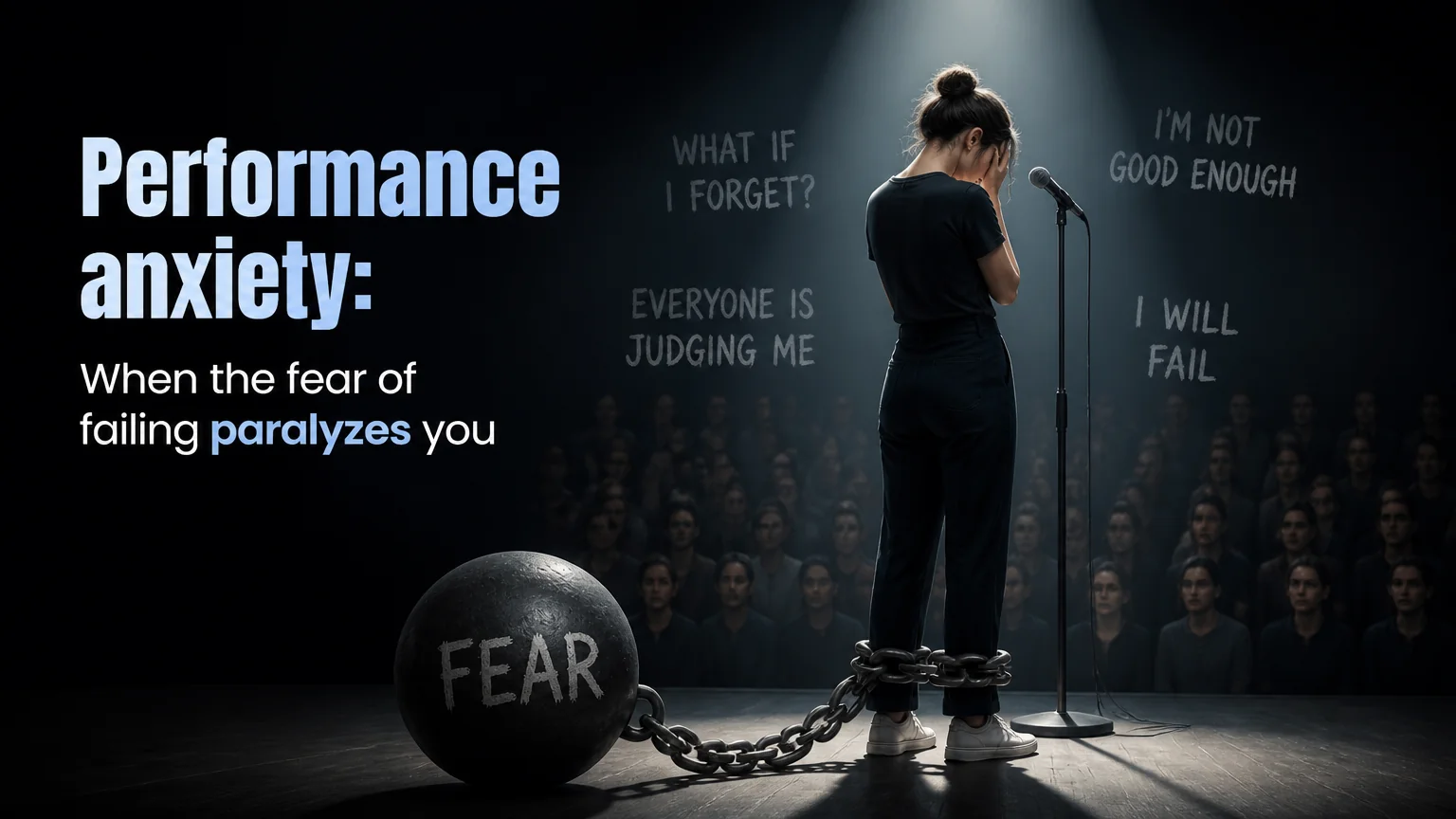
Performance anxiety, also known as execution anxiety, is an emotional response characterized by excessive worry and fear of failing in situations where performance is crucial and perceived as being evaluated. It is not simply nervousness; it is a form of social anxiety that can significantly affect our ability to function optimally.
Imagine an Olympic athlete about to compete. A slight dose of stress can sharpen their senses and improve their performance. But if that stress becomes paralyzing panic, their performance will be drastically affected. Performance anxiety operates in a similar way, interfering with our concentration, memory, and skills.
Performance Anxiety vs. Normal Stress: Where Is the Line?
It is important to distinguish between the normal stress we experience in the face of challenges and performance anxiety. Normal stress can be motivating and help us prepare better. Performance anxiety, on the other hand, is persistent, intense, and debilitating. It is characterized by:
- Intrusive negative thoughts about failure.
- Physical symptoms such as sweating, trembling, rapid heartbeat, and difficulty breathing.
- Avoidance behaviors regarding the feared situation.
- Significant impact on actual performance.
Causes of Performance Anxiety: Unraveling the Origin
Performance anxiety is multifactorial, meaning it can arise from a combination of genetic, environmental, and psychological factors. Some of the most common causes include:
Psychological Factors: The Voice of the Inner Critic
- Perfectionism: The relentless pursuit of perfection and the fear of making mistakes.
- Low Self-Esteem: The belief of not being good enough and constant self-criticism.
- Negative Thoughts: Negative inner dialogue and catastrophic anticipation of failure.
- Past Experiences: Previous negative experiences in similar situations can create a conditioned fear.
Environmental Factors: Social Pressure
- Social Pressure: Feeling the pressure to meet others' expectations (parents, teachers, employers).
- Social Comparison: Constantly comparing yourself to others and feeling inferior.
- Competitive Environment: Being in a highly competitive environment where performance is paramount.
Genetic Factors: Predisposition to Anxiety
Although there is no "performance anxiety gene," some people may have a genetic predisposition to anxiety in general, making them more vulnerable to developing this type of anxiety.
Symptoms of Performance Anxiety: Recognize the Signs
The symptoms of performance anxiety can vary from person to person and depending on the situation. Some of the most common symptoms include:
Physical Symptoms: The Body Speaks
- Rapid heartbeat and palpitations.
- Excessive sweating (especially in the hands).
- Tremors.
- Dry mouth.
- Nausea and stomach discomfort.
- Muscle tension.
- Difficulty breathing or a sensation of choking.
Cognitive Symptoms: The Mind in Conflict
- Negative and catastrophic thoughts.
- Difficulty concentrating and maintaining attention.
- Mental blocks.
- Short-term memory loss.
- Constant self-criticism.
Behavioral Symptoms: Avoidance Patterns
- Avoiding the feared situation.
- Procrastination.
- Excessive need for preparation and rehearsal.
- Constant seeking of approval.
Strategies to Overcome Performance Anxiety: Regain Control
Performance anxiety is conquerable. With the right strategies, you can learn to manage the fear of failure and unlock your potential. Here are some effective techniques:
Relaxation Techniques: Calm Your Body and Mind
- Deep Breathing: Practice diaphragmatic breathing to reduce heart rate and muscle tension.
- Meditation and Mindfulness: Focus on the present and reduce rumination of negative thoughts.
- Progressive Muscle Relaxation: Tense and relax different muscle groups to release accumulated tension.
Cognitive Techniques: Change Your Perspective
- Cognitive Restructuring: Identify and challenge negative thoughts and replace them with more realistic and positive ones.
- Positive Visualization: Imagine yourself succeeding in the feared situation.
- Mindfulness: Focus on the present instead of worrying about the future or regretting the past.
Behavioral Techniques: Face Your Fears
- Gradual Exposure: Face feared situations gradually, starting with the least frightening.
- Rehearsal and Preparation: Prepare thoroughly for the situation, but avoid overpreparing, which can increase anxiety.
- Set Realistic Goals: Set achievable goals and celebrate your accomplishments, no matter how small.
Seek Professional Support: You Are Not Alone
If performance anxiety is significantly interfering with your life, consider seeking professional help. A therapist or psychologist can help you identify the underlying causes of your anxiety and develop personalized strategies to overcome it. Cognitive-behavioral therapy (CBT) is a highly effective treatment option for performance anxiety.