For Onlinecourses55
|
2026-10-04
For Onlinecourses55
|
2026-10-04
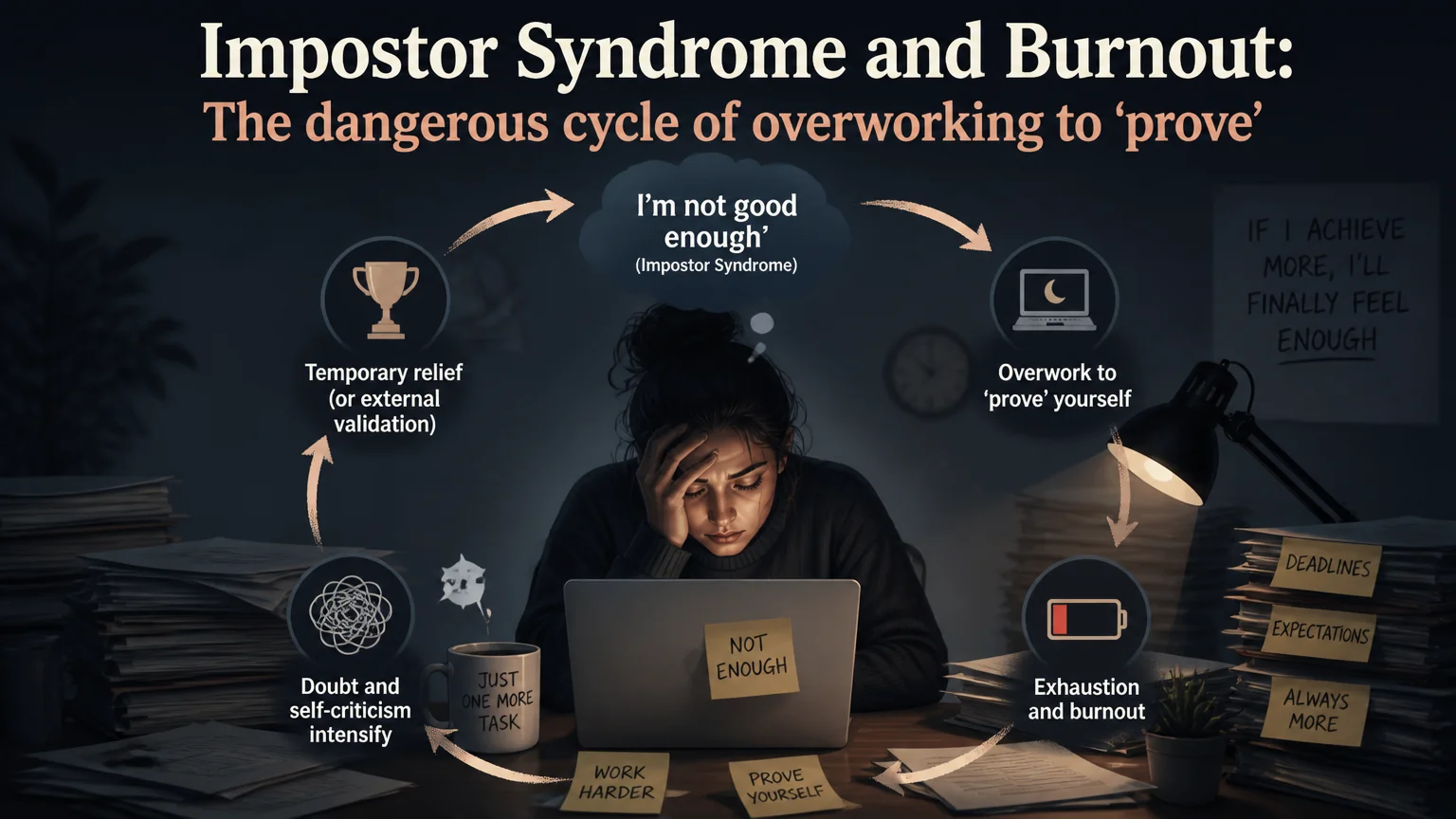
Impostor syndrome and burnout: the dangerous cycle of overworking to 'prove - syndrome impostor
Understanding your self-worth is vital for career growth. Enroll in a course that focuses on overcoming feelings of inadequacy and learn to recognize the true contributors to your success.
Impostor syndrome, that inner voice that whispers you're a fraud despite your obvious achievements, is much more common than you might imagine. It affects people across all professional levels, from recent graduates to senior executives. It's not a lack of ability, but a deep insecurity that leads you to attribute success to luck, timing, or the help of others, instead of recognizing your own talent and effort. In the workplace, this distorted self-perception can lead you to overwork, feel constant anxiety, and ultimately suffer inevitable burnout.
When impostor syndrome takes over your mind, you feel the urgent need to constantly prove your worth. This translates into long workdays, taking on more responsibilities than you can handle, and a persistent worry about meeting (or even exceeding) others' expectations. This relentless search for external validation prevents you from setting healthy boundaries, delegating tasks, and prioritizing your well-being. The result is physical and mental wear that leads you straight to burnout, also known as occupational exhaustion.
Burnout is not simply feeling tired after a tough week. It is a state of physical, emotional, and mental exhaustion caused by chronic workplace stress that has not been successfully managed. It manifests through feelings of cynicism or negativity toward work, a significant decline in job performance, and a growing sense of depersonalization. In other words, you lose passion for what you do, feel disconnected from your colleagues and the company itself, and your productivity plummets.
The connection between impostor syndrome and burnout is a vicious cycle. Impostor syndrome drives you to overwork to compensate for that supposed lack of worth. Constant overexertion depletes your physical and mental resources, leading to burnout. And burnout, in turn, further fuels impostor syndrome, as you feel unable to meet your responsibilities and mistakenly confirm your own incompetence. Breaking this cycle requires becoming aware of the problem and adopting proactive strategies to manage both impostor syndrome and work-related stress.
It's essential to recognize warning signs before impostor syndrome and burnout overwhelm you. Some key indicators include:
Fortunately, there are various strategies you can implement to break the cycle of impostor syndrome and burnout. These strategies focus on changing your thinking, managing your time, and prioritizing your well-being:
The first step is to identify the negative thoughts that fuel impostor syndrome. Question their validity and replace those thoughts with positive, realistic affirmations. For example, instead of thinking "I'm not good enough for this job," think "I have the skills and experience necessary to succeed in this job."
Take the time to reflect on your achievements and acknowledge your own worth. Create a list of your accomplishments and remember how you have contributed to your team's and the company's success. Celebrate your achievements, no matter how small.
Learn to say "no" to requests that overwhelm you and prioritize your most important tasks. Set clear boundaries between your work and personal life and dedicate time to activities that relax and recharge you.
Don't try to do everything yourself. Delegate tasks to other team members and trust in their abilities. Delegating frees up time and energy for you to focus on your priorities.
Prioritize your physical and mental well-being. Get enough sleep, eat healthily, exercise regularly, and make time for activities you enjoy. Self-care is not a luxury; it's a necessity to maintain your health and well-being.
If impostor syndrome and burnout are significantly affecting you, consider seeking professional help. A therapist or coach can help you develop strategies to manage your thoughts and emotions and break the cycle of self-sabotage.