For Onlinecourses55
|
2026-11-01
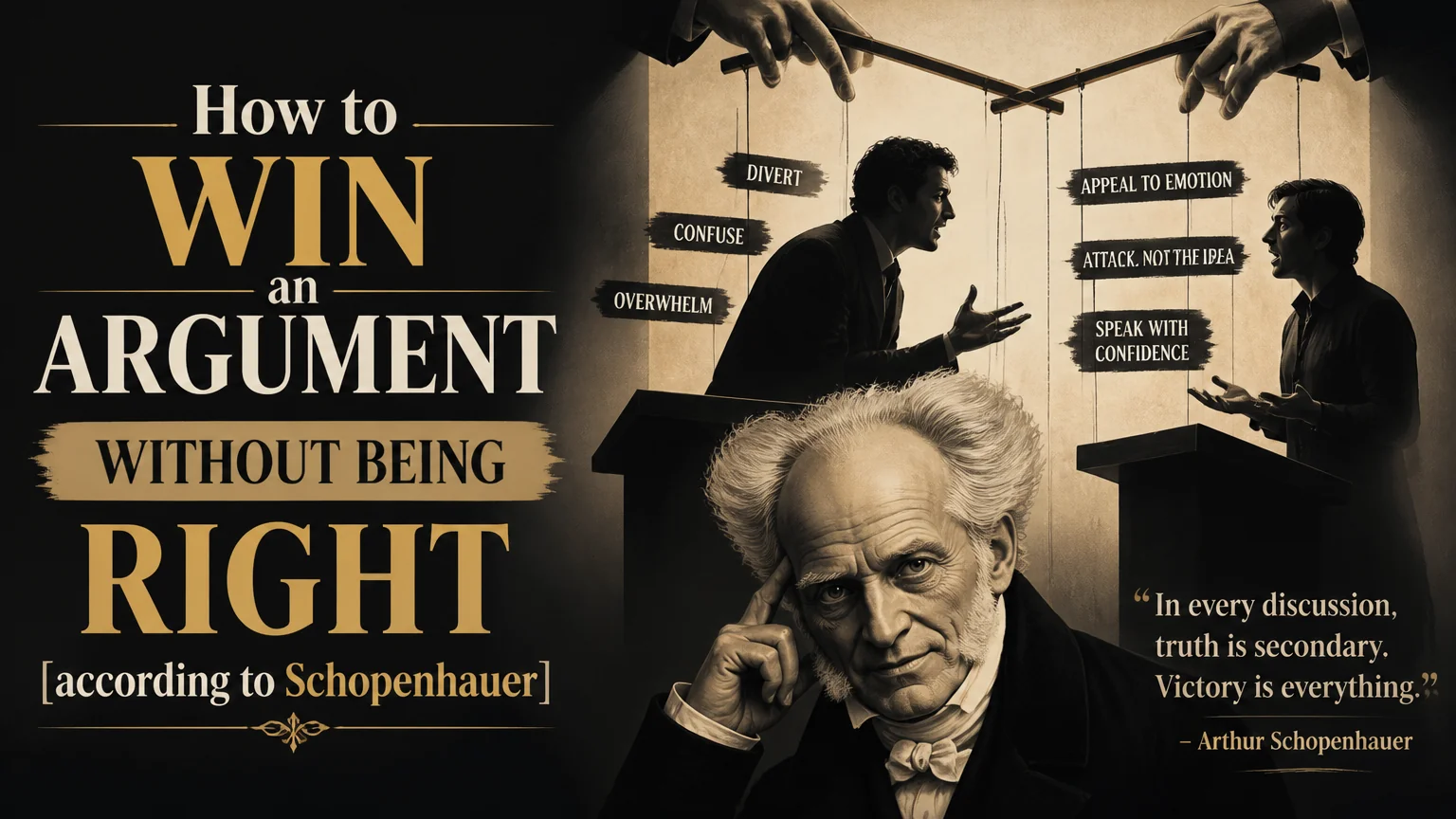
How to win an argument without being right [according to schopenhauer] - techniques persuasion manipulation
Mastering persuasive techniques can help you navigate heated discussions. Dive into the art of argumentation with comprehensive persuasion strategies that sharpen your ability to influence others effectively.
In the labyrinth of human interactions, arguments are inevitable. Often, what matters is not objective truth, but the perception of who "wins" the debate. Arthur Schopenhauer, the famous German philosopher, explored this dynamic in his work "Eristic Dialectic", where he breaks down the strategies to prevail in a discussion, even when reason is not on our side. This article unravels the main tricks and tactics Schopenhauer proposes, offering a clear and practical view on how to navigate the art of persuasion and argumentation.
Eristic dialectic, according to Schopenhauer, is the art of arguing in such a way that one appears to be right, by lawful and unlawful means. It is not about seeking the truth, but about defending one's position at all costs. In a world where opinion often outweighs facts, understanding the principles of eristic dialectic can be crucial to defend our ideas, influence others, and avoid being manipulated.
The relevance of this approach lies in the fact that discussions are rarely based on pure logic and objectivity. Factors such as emotion, personality, and rhetoric play a fundamental role. Knowing Schopenhauer's strategies allows us to anticipate an opponent's moves and respond effectively, even when faced with fallacious or manipulative arguments.
Schopenhauer identifies a series of stratagems or tricks to win an argument. Here we explore some of the most effective:
This tactic consists of taking the opponent's assertion to a broader, more general ground where it is easier to attack. For example, if someone claims that "Pedro likes wine", we could respond: "So, does everyone like wine?" By generalizing the original claim, we make it more vulnerable to refutation.
Homonymy takes advantage of the ambiguity of words. A term that has different meanings is used to attack the opponent's assertion by employing one of the less favorable meanings. Imagine someone says: "We must promote 'culture' in our society". We can counter by saying: "Do you mean 'culture' as in intensive agriculture that depletes natural resources?"
It is essential not to reveal our intentions to the opponent. If we show clearly where we want to go with our arguments, we give them the opportunity to anticipate our strategy and defend themselves. Subtlety and indirectness are valuable tools in eristic dialectic.
When the opponent becomes irritated, they lose objectivity and the ability to reason clearly. Provoking them with sarcastic remarks or personal attacks can destabilize them and cause them to make mistakes in their argumentation.
The *ad hominem* argument consists of attacking the person who makes the claim instead of addressing the claim itself. Discrediting the opponent's credibility or morality can be an effective way to undermine their argument, even if it is valid.
Formulating questions that force the opponent to choose between two unfavorable options is a common technique. For example: "Do you support freedom of expression even for those who promote hate?" Whatever the answer, the opponent will find themselves in a compromised position.
Although eristic dialectic can be useful for winning arguments, it is important to recognize its limitations and dangers. The main criticism is that it prioritizes victory over truth. Instead of seeking mutual understanding and a solution based on reason, it focuses on imposing one's opinion, even at the cost of intellectual honesty.
Furthermore, excessive use of these tactics can damage interpersonal relationships and the reputation of the person who employs them. Being perceived as a manipulator or a charlatan can have negative long-term consequences.
Despite its negative connotations, knowledge of eristic dialectic can be used ethically and constructively. Instead of employing it to manipulate and deceive, we can use it to defend ourselves from unfair attacks, identify fallacies in others' arguments, and promote a more informed and rational debate.
The key is to use these strategies with moderation and responsibility, always prioritizing the search for truth and respect for the interlocutor. Rather than seeking victory at any price, we should aspire to a constructive dialogue that allows us to learn and grow together.
Search
Popular searches