Impostor syndrome in victims: 'it wasn't that bad - violence domestic family

onlinecourses55.com For Onlinecourses55 | 2026-10-27
Impostor syndrome in victims: 'it wasn't that bad - violence domestic family


Impostor syndrome in victims: 'it wasn't that bad - violence domestic family

Impostor Syndrome can affect many, particularly those who have experienced trauma. Join our comprehensive course emphasizing domestic violence dynamics to uncover ways to rebuild identity and confidence.

The Impostor Syndrome is a psychological phenomenon that manifests in people who, despite their proven achievements and abilities, are unable to internalize their success and maintain a persistent fear of being exposed as a fraud. While this syndrome is commonly associated with the professional or academic sphere, its impact on victims of abuse and trauma is particularly devastating, especially when combined with the minimization of their experiences through the phrase "It wasn't that bad".

What Is Impostor Syndrome? A Constant Doubt

The Impostor Syndrome is not an official clinical diagnosis, but it describes a very common reality. People who experience it feel like impostors, doubt their worth, and attribute their successes to luck, being in the right place at the right time, or the help of others. This constant self-doubt can generate anxiety, stress, and low self-esteem.

The Impact of "It Wasn't That Bad" on the Victim

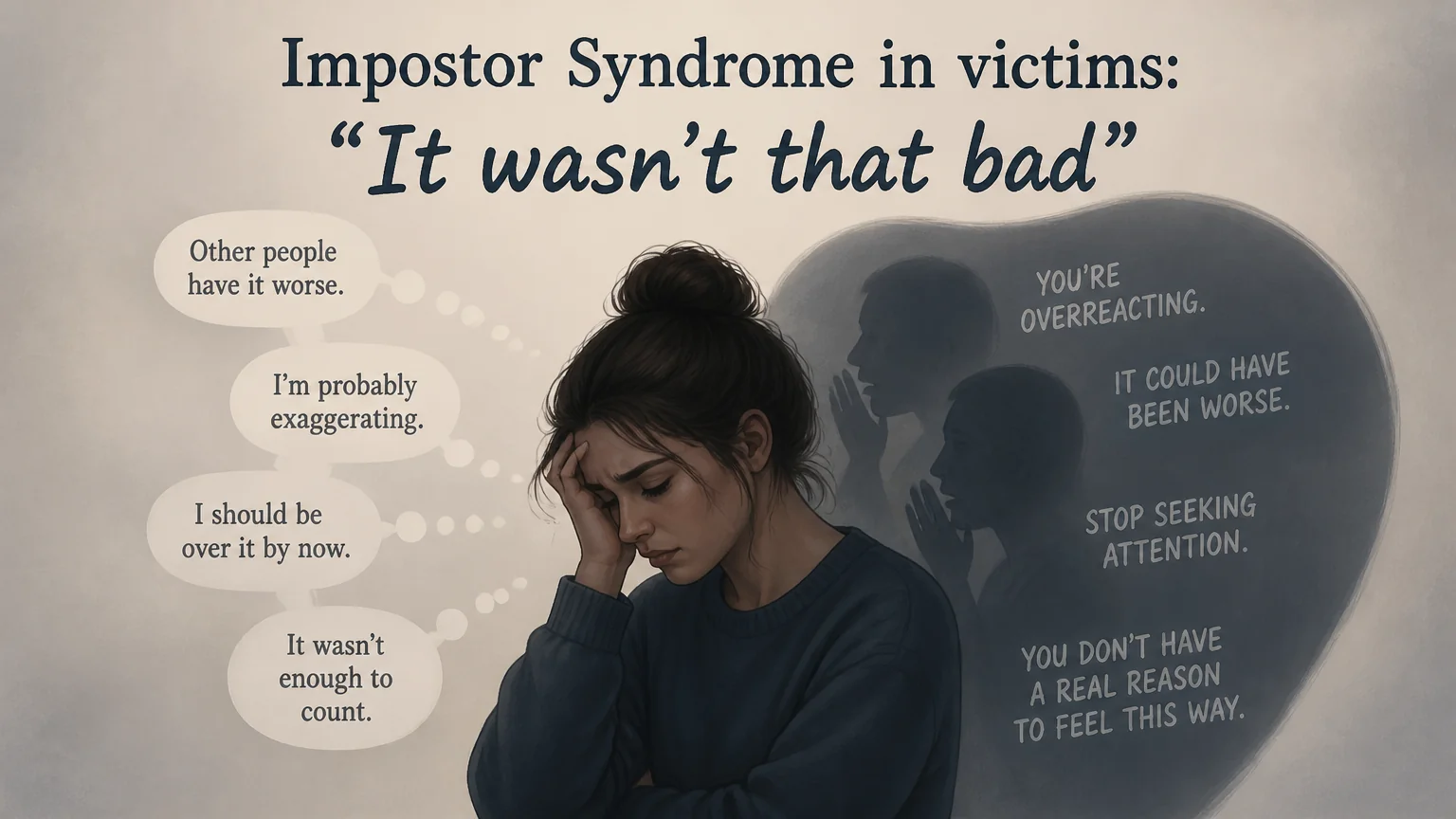
For a victim of abuse, hearing the phrase "It wasn't that bad" can be deeply invalidating. This minimization of their experiences contributes to their internalizing the belief that their feelings are not valid, that they are exaggerating, or that they are too sensitive. This invalidation feeds the Impostor Syndrome, causing the victim to doubt even more their perception of reality and their ability to overcome the trauma.

The Internalization of Doubt: A Vicious Cycle

When a victim internalizes the doubt imposed by the phrase "It wasn't that bad", they begin to question their own memory and emotions. Was it really that serious? Am I exaggerating my reaction? This constant doubt undermines their confidence and prevents them from seeking help or speaking openly about what happened. Thus a vicious cycle is created where the minimization of harm perpetuates silence and suffering.

How Does Impostor Syndrome Manifest in Victims of Abuse?

In victims of abuse, Impostor Syndrome can manifest in various ways:

  • Denial of their own feelings: The victim may feel they have no right to feel sad, angry, or scared because "it wasn't that bad".
  • Difficulty trusting their judgment: The victim may doubt their ability to make decisions and their perception of reality.
  • Fear of being judged: The victim may fear that others will consider them exaggerated, dramatic, or weak.
  • Feelings of guilt and shame: The victim may feel guilty about what happened to them, even if it was not their fault.
  • Social isolation: The victim may avoid contact with others for fear of being judged or out of shame.

Breaking the Cycle: Healing and Rebuilding

Breaking the cycle of Impostor Syndrome and the minimization of harm requires a process of healing and rebuilding that involves:

  • Validation of the experience: Acknowledging and accepting that what happened was real and that their feelings are valid.
  • Seeking professional support: Therapy can help the victim process the trauma, rebuild their self-esteem, and develop healthy coping strategies.
  • Connecting with other victims: Sharing experiences with others who have gone through similar situations can help the victim feel less alone and validate their feelings.
  • Practicing self-compassion: Treating oneself with kindness and understanding, especially in times of difficulty.
  • Acknowledging and celebrating achievements: Accepting successes and recognizing one's own worth, without minimizing them or attributing them to luck.

Strategies to Combat Impostor Syndrome

Beyond the therapeutic process, there are practical strategies that can help combat Impostor Syndrome:

  • Keep a record of your achievements: Write down your successes, no matter how small, to remind yourself of your capabilities.
  • Challenge your negative thoughts: Question the irrational beliefs that fuel the syndrome.
  • Talk to trusted people: Share your insecurities with friends, family, or therapists.
  • Focus on your strengths: Identify your skills and talents and use them to your advantage.
  • Accept that nobody is perfect: Allow yourself to make mistakes and learn from them.

Become an expert in Violence domestic family!

Certified Course in Domestic Violence: Learn to detect cases and act successfully — Composed of 13 topics and 32 hours of study — Price: $12 only

EXPLORE THE COURSE NOW

Recent Posts


★