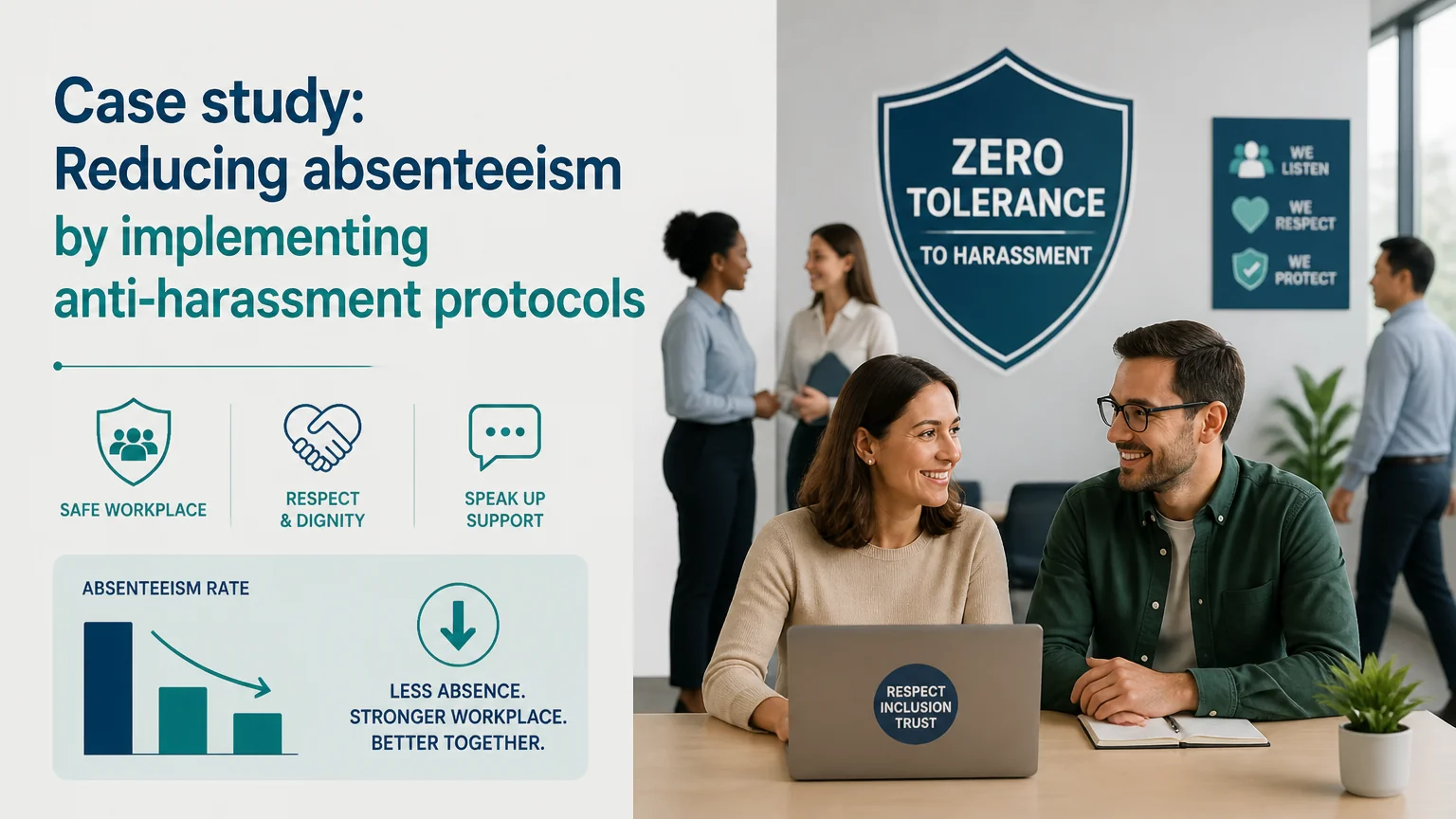
The importance of psychosocial risk assessment in your company - workplace harassment
Understanding psychosocial risks in the workplace can significantly enhance organizational health. To implement effective workplace strategies, you’re encouraged to join our in-depth training on managing harassment and safety for a thriving work environment.
In today’s competitive business world, employee well-being has become a crucial factor for organizational success. The psychosocial risk assessment is no longer a luxury, but an urgent necessity to ensure a healthy, productive and sustainable work environment.
This article delves into the importance of identifying, preventing and managing psychosocial risks within your company, offering a comprehensive guide to implementing an effective program.
What are Psychosocial Risks and Why Are They Important?
Psychosocial risks are defined as those conditions present in a work situation that are directly related to the organization of work, job content and task execution, and that have the capacity to affect the worker's well-being or health (physical, psychological or social), as well as work development.
These risks can manifest in various ways, including:
- Chronic work-related stress: Caused by constant pressure, lack of control over work and scarcity of resources.
- Workplace bullying (mobbing): Negative and systematic behaviors directed at an employee, creating a hostile environment.
- Work overload: Excessive amount of tasks and responsibilities, leading to burnout and decreased performance.
- Lack of social support: Isolation, poor interpersonal relationships and lack of backing from colleagues and supervisors.
- Job insecurity: Constant worry about job stability, affecting motivation and commitment.
- Workplace violence: Physical or verbal assaults, both internal and external.
The importance of addressing these risks lies in their significant impact on employees' health, manifesting in problems such as anxiety, depression, cardiovascular diseases, sleep disorders and absenteeism. In addition, a work environment loaded with psychosocial risks negatively affects productivity, work quality, innovation and the company's reputation.

Benefits of Psychosocial Risk Assessment for Your Company
Implementing a psychosocial risk assessment brings numerous tangible benefits to your organization:
- Improved work environment: Creates a more positive, safe and respectful workplace climate.
- Increased productivity: Healthier and more motivated employees are more efficient and productive.
- Reduction of absenteeism: Decreases sick leave due to stress, anxiety and other work-related illnesses.
- Decreased staff turnover: Satisfied and valued employees are more likely to remain with the company.
- Improved corporate image: A company that cares about employee well-being attracts and retains talent.
- Regulatory compliance: Avoids penalties and legal problems by complying with obligations in occupational risk prevention (ORP).
- Cost reduction: Reduces costs associated with absenteeism, turnover, workplace accidents and low productivity.
Steps to Implement an Effective Psychosocial Risk Assessment
Carrying out a psychosocial risk assessment effectively requires a structured and participatory process:
- Planning: Define the objectives of the assessment, the scope, the necessary resources and the timeline.
- Awareness and participation: Inform and motivate employees to participate actively in the process, explaining the importance of their collaboration.
- Identification of risks: Use different methods to identify the psychosocial risks present in the company, such as questionnaires, interviews, direct observation and data analysis (absenteeism, turnover, accidents).
- Risk assessment: Analyze the likelihood of occurrence and the severity of the consequences of each identified risk.
- Design of preventive and corrective measures: Develop an action plan with concrete measures to eliminate or minimize the identified risks. These measures may include changes in work organization, training programs, improved communication, promotion of work-life balance, and psychological support.
- Implementation of measures: Put the action plan into operation, assigning responsibilities and resources.
- Monitoring and evaluation: Monitor the effectiveness of the measures implemented and make adjustments if necessary. Conduct periodic evaluations to identify new risks and ensure continuous improvement.
Tools and Methods for Psychosocial Risk Assessment
There are various tools and methods to carry out the psychosocial risk assessment. The choice of the appropriate tool will depend on the characteristics of the company, the resources available and the objectives of the assessment. Some of the most used tools include:
- Standardized questionnaires: There are numerous scientifically validated questionnaires that assess different aspects related to psychosocial risks, such as ISTAS21, COPSOQ and FPSICO.
- Individual or group interviews: They allow obtaining detailed information about employees' experiences and perceptions.
- Discussion groups: They encourage participation and the exchange of ideas among employees.
- Direct observation: It allows analysis of the work environment and interactions between employees.
- Data analysis: Examines data such as absenteeism, turnover, workplace accidents and employee complaints to identify potential problems.
The Importance of Training and Awareness
Training and awareness are key elements for the success of any psychosocial risk prevention program. It is essential that employees understand what psychosocial risks are, how to identify them and how to prevent them. Training should be aimed at all levels of the organization, from senior management to frontline employees.
Training programs can include topics such as:
- Stress management
- Effective communication
- Conflict resolution
- Emotional intelligence
- Prevention of workplace harassment
- Mental health promotion
 For Onlinecourses55
|
2026-07-29
For Onlinecourses55
|
2026-07-29