For Onlinecourses55
|
2026-06-08
For Onlinecourses55
|
2026-06-08

Online course on food allergens and intolerances for food handlers - allergens
Understanding how to prepare food safely is fundamental for today’s professionals. Get started with our specialized training on managing allergies and intolerances and enhance your skills.
Hello everyone! In the world of gastronomy, it is increasingly important to know and understand food allergies and intolerances. It''s not enough to cook delicious food; you have to cook safely! This article is a comprehensive guide to online courses on food allergens and intolerances, designed especially for you, the food handlers. Ready to become food safety experts? Let''s go!
Seriously, have you ever wondered why there is such a fuss about allergens? The answer is simple: our customers'' health is at stake. An allergic reaction can be mild, but it can also be very serious, even putting a person''s life at risk! Therefore, training in this field is fundamental.
Imagine for a moment that you are allergic to shellfish and, unknowingly, eat something contaminated with traces of shrimp. The shock can be tremendous! Food safety is not just a legal requirement, it is a moral responsibility. By knowing allergens and how to prevent them, you are protecting your customers and building a reputation of trust for your business.
This course is for you, if you are:
In short, for anyone who works with food! It doesn''t matter if you have years of experience or if you are just starting out, there is always something new to learn.
A good online course on food allergens and intolerances should cover a wide range of topics. Here are some of the key points you should find:
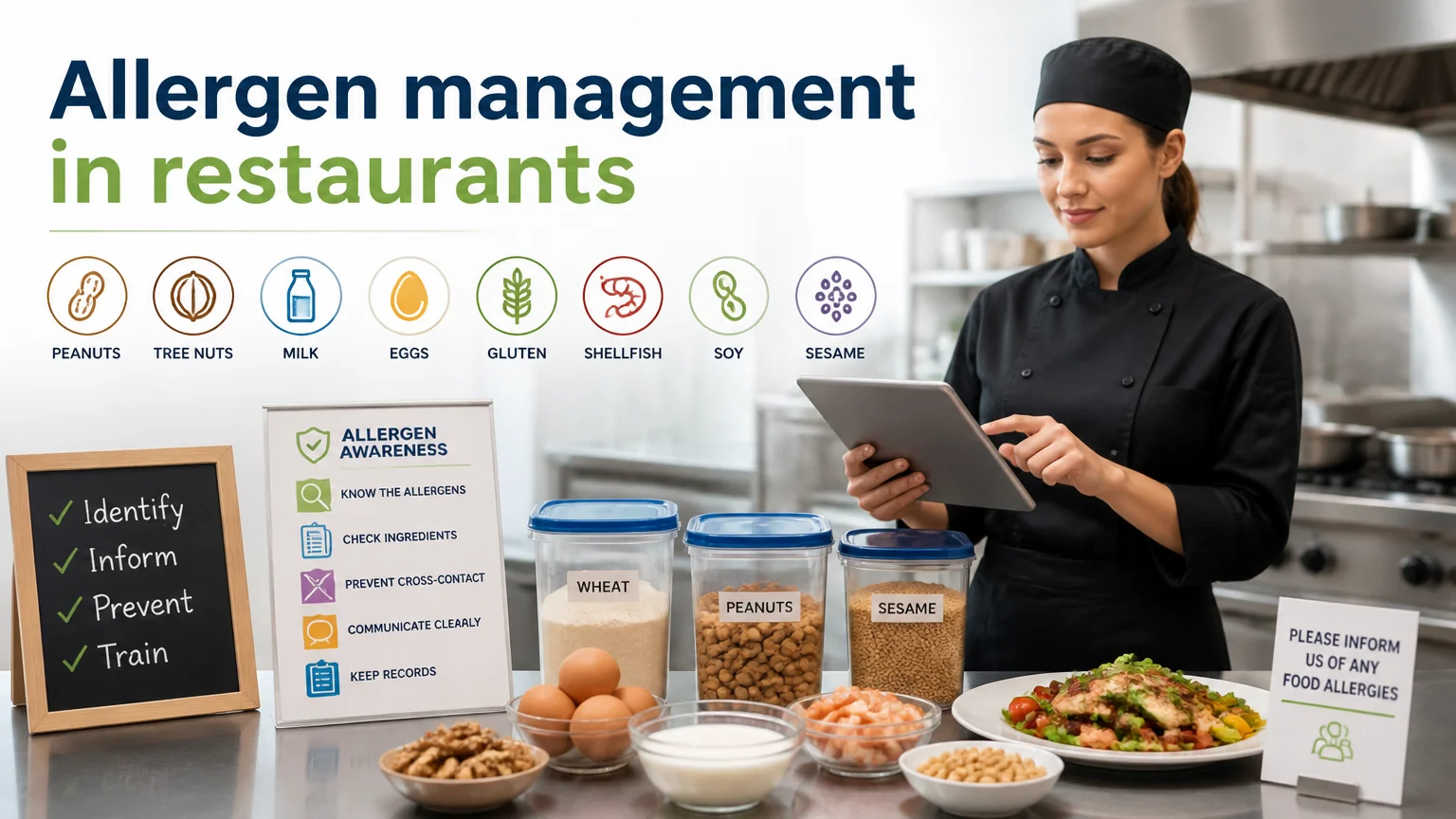
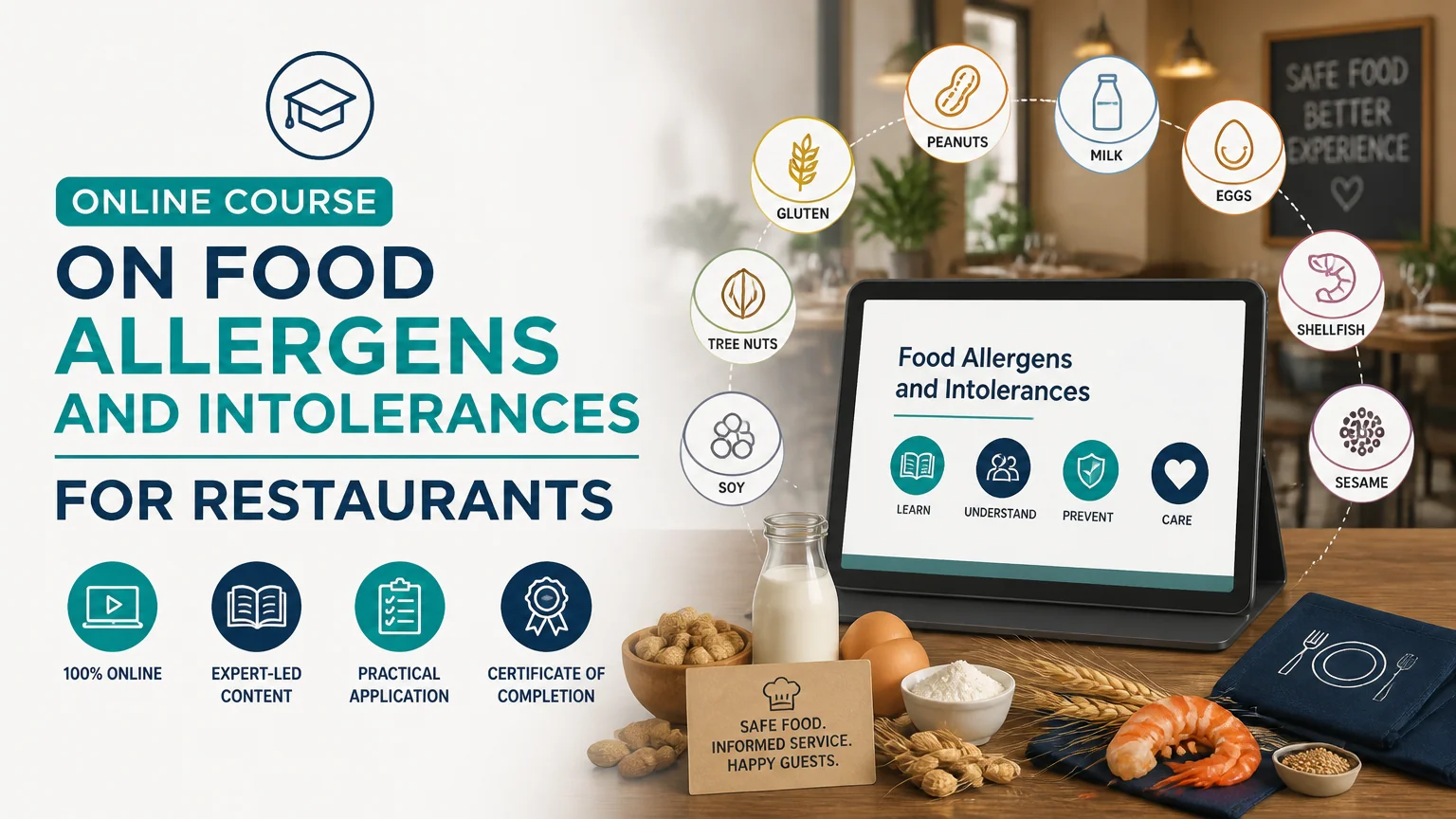
Allergens are everywhere, but you have to know where to look! The course will teach you how to identify the 14 mandatory declarable allergens according to European regulations. We are talking about:
You will learn to recognize them in ingredients, in processed products, and on labels.
They are often confused, but they are different things. An allergy is a reaction of the immune system, while an intolerance is a difficulty in digesting certain foods. The course will explain the differences between the two and how to manage them in the kitchen. For example, a person lactose intolerant can consume lactose-free products, while a person allergic to milk must avoid any contact with it.
Watch out! The law is the law. It is essential to know the current regulations to avoid sanctions and, most importantly, to protect your customers.
Regulation (EU) No. 1169/2011 is the basis of European legislation on food information provided to the consumer. It establishes the obligation to inform about the presence of allergens in food, both packaged and non-packaged.
In Spain, Royal Decree 126/2015 develops the European Regulation and establishes specific rules for information on allergens in non-packaged foods, such as those served in restaurants and bars.
Still not convinced? Here are some benefits of training online:
You can study whenever and wherever you want. Do you have 15 minutes free during a work break? Take advantage of it to review a module! There are no fixed schedules or travel requirements.
Online courses are usually more economical than in-person courses. Additionally, you save money on transportation and meals away from home. More money to invest in quality ingredients!
The world of food is constantly evolving. Online courses allow you to stay up-to-date with the latest developments and regulations regarding allergens.
Not all courses are the same. Here are some tips for choosing the one that best suits your needs:
Make sure the course is accredited by a recognized entity. A valid certificate will serve to demonstrate your knowledge and skills to health authorities.
The course must cover all relevant aspects of legislation, allergen identification, and the prevention of cross-contamination. Don''t settle for less!
It is important that the course offers technical support and tutoring to resolve your doubts. A good instructor can make the difference between passing and failing.
Cross-contamination is the number one enemy of allergy sufferers. Here are some practical tips to avoid it:
Wash your hands frequently, especially after handling foods that contain allergens. Keep your work area clean and tidy.
Use different utensils and work surfaces for foods with and without allergens. Store foods in closed and labeled containers.
Wash and disinfect utensils after each use. Use specific cleaning products to eliminate allergen residues.
Allergen training is evolving rapidly. Don''t be left behind!
New technologies are being developed to quickly and accurately detect the presence of allergens in food. We are talking about portable sensors, DNA tests, and other innovative tools.
Artificial intelligence can personalize training based on your needs and knowledge. Imagine a course that adapts to your learning pace and offers specific content to strengthen your weak points.
In summary, training in food allergens and intolerances is essential for any food handler. An online course provides you with the knowledge and skills necessary to protect your customers and comply with current regulations. Don''t hesitate any longer and sign up for a course today! Your future and that of your customers will thank you.
Search
Popular searches