For Onlinecourses55
|
2026-03-16
For Onlinecourses55
|
2026-03-16

Online course on gluten-free food allergens and intolerances - allergens
Do you want clarity on food sensitivities? Join our online course designed for comprehensive understanding and empower yourself to manage these issues.
Hello everyone! Have you ever wondered why more and more people are talking about food allergies, intolerances, and gluten-free diets? Well, you''re in the right place. In this article, we are going to thoroughly explore a crucial current topic: food allergens and intolerances, and how an online course can give you the necessary tools to understand and manage this complex world. Ready to dive in? Let''s go!
In a world where information abounds but clarity is scarce, an online course on food allergens and intolerances is more than an option—it is a necessity. Why? Because allergies and intolerances are on the rise, and knowledge is the best weapon to protect our health and the health of others.
More and more people are being diagnosed with food allergies or intolerances. Have you noticed the number of "free-from" products in supermarkets? This is no coincidence. Allergies can cause severe, even fatal, reactions, and intolerances can significantly affect the quality of life. Therefore, knowing how to identify symptoms, understand the causes, and know the best management strategies is essential.
Gluten, the protein found in wheat, barley, and rye, has become a hot topic. Beyond celiac disease, there is a growing non-celiac gluten sensitivity that affects a significant percentage of the population. The demand for gluten-free products has skyrocketed, and with it, the need for trained professionals to offer safe and delicious alternatives.
A good online course on food allergens and intolerances will provide you with comprehensive and practical knowledge. Here are some of the key areas you should master upon completing the course:
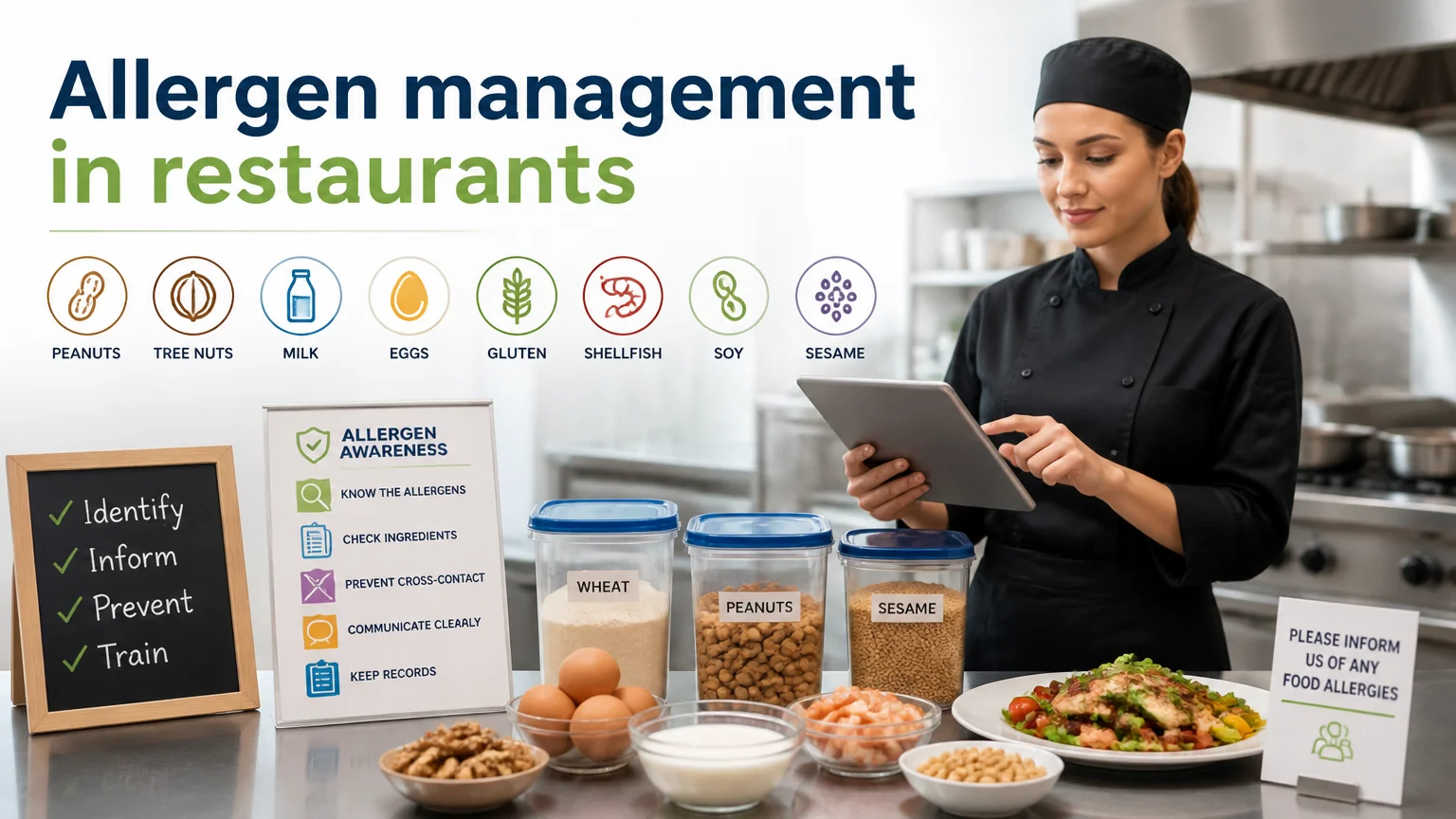
You will learn to recognize the most common allergens, such as milk, egg, nuts, fish, and shellfish, and how allergic reactions manifest. Furthermore, they will teach you how to handle emergency situations, what to do in case of anaphylaxis, and how to communicate effectively with allergic individuals.
It is crucial to understand the difference between an allergy and an intolerance. An allergy involves an immunological response from the body, while an intolerance is generally related to the difficulty in digesting certain foods. You will learn to distinguish them and understand the underlying mechanisms.
You will delve into celiac disease, an autoimmune condition triggered by gluten, and non-celiac gluten sensitivity, a less known but equally important condition. You will learn about the symptoms, diagnosis, and treatment, including the gluten-free diet.
Allergen legislation is essential to protect consumers. You will learn about the regulations in force in your country, labeling requirements, and the responsibilities of producers and catering establishments. Did you know that a lack of information about allergens can lead to financial penalties? Better be prepared!
Why choose an online course instead of an in-person course? The benefits are numerous and adapt to the needs of modern life.
The main advantage of an online course is flexibility. You can study at your own pace, whenever and wherever you want. Do you have a busy schedule? No problem. You can access the course material 24 hours a day, 7 days a week.
Online courses are usually taught by subject experts and offer access to updated materials and multimedia resources. In addition, they often include discussion forums where you can interact with other students and resolve your questions.
Upon completing the course, you will receive a certification that accredits your knowledge and skills. This certification can be a valuable asset to your curriculum vitae and can open doors for you in the job market.
This course is designed for a wide variety of people who wish to expand their knowledge of food allergens and intolerances.
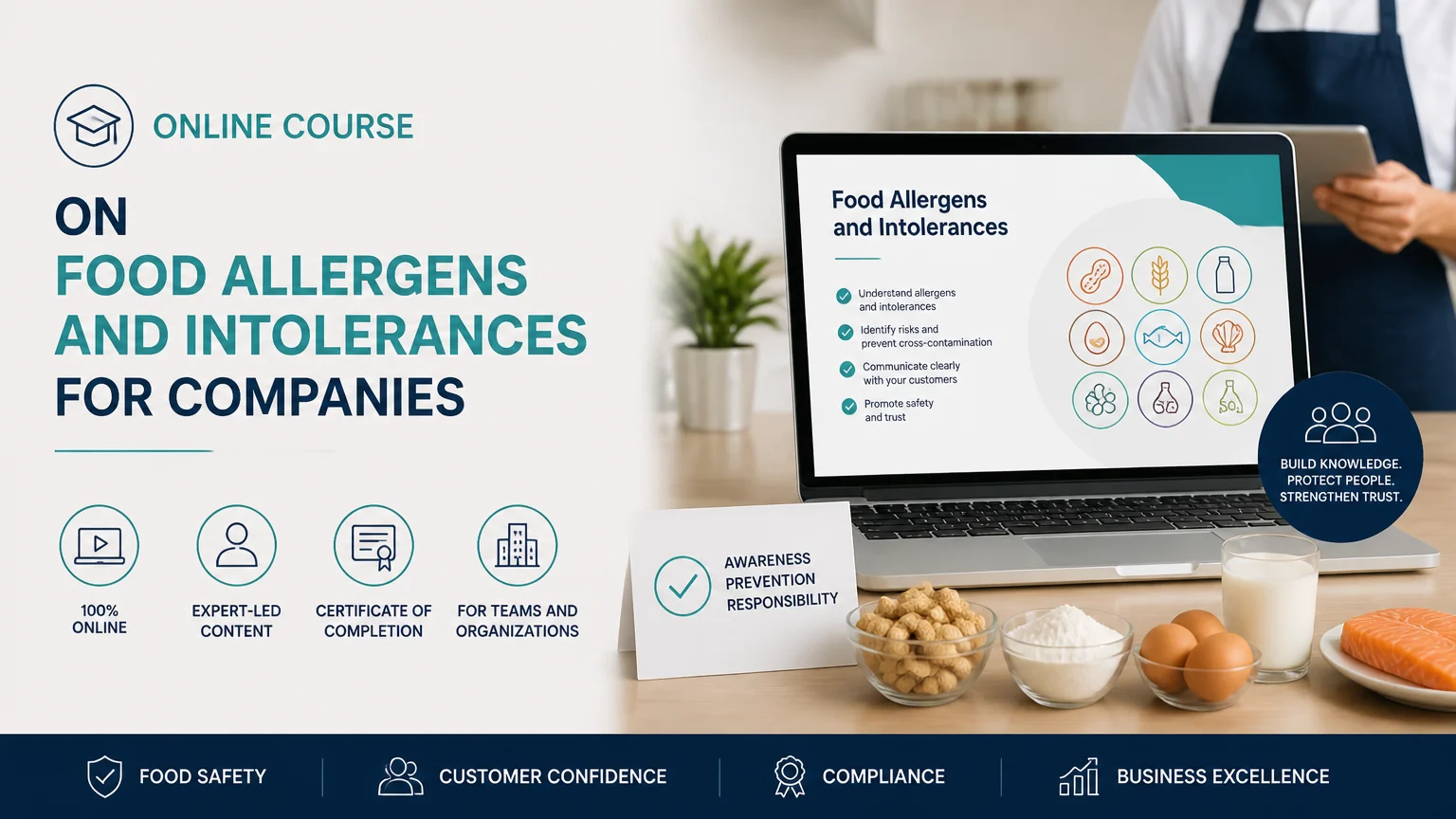
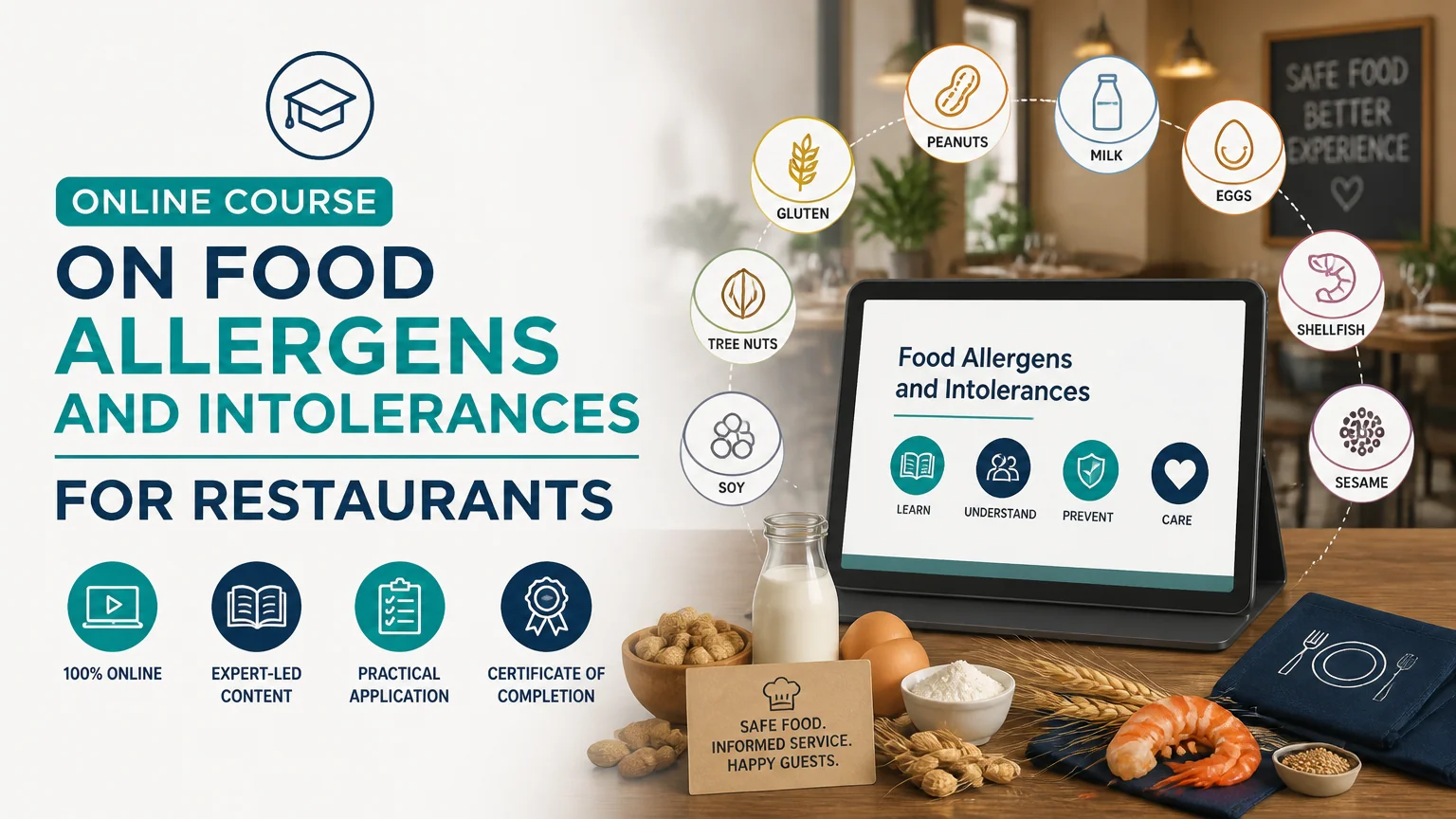
If you work in a restaurant, a hotel, or any other catering establishment, this course will provide you with the necessary tools to offer a safe and inclusive service to your customers. You will learn to identify the allergens present in your dishes, adapt your recipes, and communicate effectively with customers who have allergies or intolerances.
If you or a family member has a food allergy or intolerance, this course will help you better understand the condition, manage the symptoms, and make informed decisions about your diet. You will learn to read food labels, avoid hidden allergens, and cook safe and delicious recipes.
If you are studying nutrition or dietetics, this course will complement your training and provide you with specialized knowledge about food allergens and intolerances. You will be prepared to advise your future patients and design personalized nutrition plans.
To give you an idea of what you can expect from an online course on food allergens and intolerances, here is a possible content outline:
In this module, key concepts will be defined, such as food allergy, food intolerance, celiac disease, and non-celiac gluten sensitivity. Relevant statistics on the prevalence of these conditions in the population will also be presented.
This module will focus on the most common allergens, such as milk, egg, nuts, fish, and shellfish. The characteristics of each allergen, the symptoms of the allergic reaction, and prevention strategies will be analyzed.
This module will be dedicated to gluten and celiac disease. Diagnosis, treatment, and the gluten-free diet will be addressed. Recipes and tips for cooking gluten-free will be provided.
This module will focus on legislation and allergen labeling. You will learn how to interpret food labels and identify hidden allergens. The legal requirements that producers and catering establishments must comply with will also be analyzed.
The process of enrolling in an online course is very simple. Generally, you just need to access the course website, register, select the payment method, and that''s it! You can start learning. Be sure to carefully read the course description, the syllabus, and the opinions of other students before signing up.
In summary, an online course on gluten-free food allergens and intolerances is a valuable investment for anyone interested in learning more about this crucial topic. Whether you are a hospitality professional, someone with allergies or intolerances, or a nutrition student, this course will provide you with the necessary tools to protect your health and the health of others. Don''t wait any longer and take the first step toward a safer and healthier future!
Does the course include downloadable material?
Yes, most online courses on food allergens and intolerances usually include downloadable material, such as guides, recipes, and presentations. This allows you to review the course content whenever and wherever you want.
Do I need to have prior knowledge of nutrition to take the course?
Not necessarily. While having some basic knowledge of nutrition can be helpful, most courses are designed to be accessible to people without prior experience.
Does the course offer technical support?
Yes, most online courses offer technical support to help you resolve any issues you may have with the platform or the course material.
How long do I have to complete the course?
This depends on the specific course. Some courses have a deadline, while others allow you to complete the course at your own pace, without time restrictions.
Is the course certification internationally recognized?
This also depends on the specific course. Some courses offer certifications recognized nationally or internationally, which can be a valuable asset to your curriculum vitae. Be sure to verify this detail before enrolling.
Search
Popular searches