For Onlinecourses55
|
2026-09-24
For Onlinecourses55
|
2026-09-24
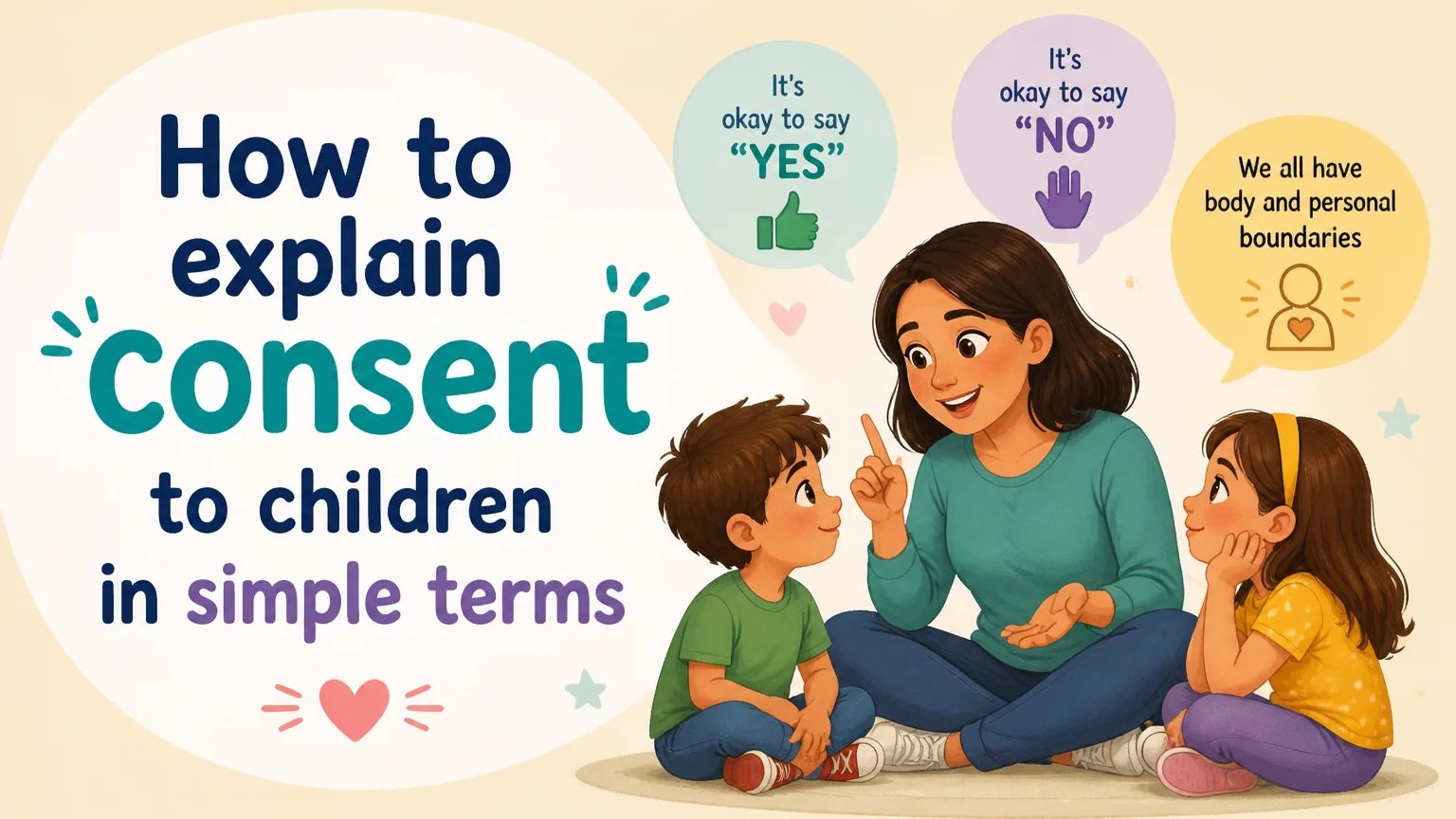
How to explain consent to children in simple terms - education sexual parents
Teaching consent early is crucial for your child's development; consider our essential course on instilling respect and understanding in young children to guide discussions.
Learning about consent isn’t just a lesson about “yes” or “no”; it’s about teaching respect, boundaries, and communication. Children who understand consent develop the skills to manage healthy relationships, recognize when something isn’t right, and ask for help. Additionally, they learn that consent protects their bodies and emotions and helps them respect the bodies and feelings of others.
Explain that each person is in charge of their own body. No one can force them to touch, hug, or kiss someone if they don’t want to. Likewise, they shouldn’t force others to do so either. Using simple phrases like “my body, my rules” helps drive the point home.
Consent involves asking for permission and accepting the response. Teach them that “May I…?” is a respectful way to ask, and that an answer can be “yes,” “no,” or “not right now.” All answers are valid and must be respected.
It must be clear that if someone is asleep, confused, or very scared, they cannot give permission. Nor does “maybe” or silence mean yes; only a clear and enthusiastic “yes” counts as permission.
“Can I give you a hug?” — “No, thanks.” — Respect their answer and smile.
“Do you want to play marbles with me?” — “Yes, I’d love to.” — Start playing because there’s a “yes.”
“When I touch your arm, do you like it or not?” — “Acknowledge the answer and stop if they don’t like it.”
“If you feel uncomfortable, you can say ‘stop’ or ‘I don’t want to.’”
Use colors or gestures: green for yes, yellow for maybe, red for no. Ask the children to respond with the signal before performing an action (a hug, a game, sharing a toy). This helps them recognize and express their boundaries.
Act out simple situations: a friend wants to take a toy, someone asks for a kiss, an adult wants to help with getting dressed. Practice responses and how to react if someone doesn’t respect a boundary: say “no,” walk away, and tell a trusted adult.
Read stories in which the characters ask for permission and respect boundaries. After reading, ask questions: “What did this character do right?” or “What could you do if the same thing happened to you?”
Use short phrases and concrete examples: “If you don’t want a hug, you can say ‘no, thank you.’” Teach the proper names for body parts and which parts are private. Emphasize that no one should touch those parts without permission and that they should tell an adult if someone does.
Expand the conversation: introduce the concept of consent in the context of friendship and play. Teach respect for others’ and their own boundaries, and how to ask for help if someone persists. Also talk about sharing photos or passwords on devices: always ask for permission before showing or sending images of another person.
Go deeper into verbal and emotional communication. Teach them to identify nonverbal cues, negotiate boundaries, and respect decisions. Discuss situations where consent cannot be given and the importance of protection and support resources.
Teach children to stop, walk away, and clearly say “no” or “stop.” It’s helpful to practice short, firm phrases. If they feel unsafe, they should find a trusted adult or leave the area using whatever excuse they need.
Explain to them that telling someone what happened isn’t “tattling”—it’s taking care of themselves. Tell them who they can turn to: a parent, teacher, family member, or school professional. Emphasize that adults should take what they say seriously and protect them.
Model appropriate behavior: Ask for permission before hugging or touching a child, and respect their response.
Talk regularly: Make consent a natural part of conversation, not a one-time or awkward discussion.
Use clear, age-appropriate language, avoiding confusing euphemisms.
Reinforce the idea that saying “no” is okay and that asking for help is brave.
Prepare responses for when other adults don’t respect boundaries: step in, protect the child, and explain why the behavior is inappropriate.
Asking for permission applies online, too: before sharing photos of friends, tagging them, or sending messages containing personal information, you must ask for permission. Teach children not to accept requests from strangers, to keep passwords private, and to tell an adult if someone makes them feel uncomfortable online.
Some signs include changes in behavior, fear of certain people, withdrawal, nightmares, or unexplained physical symptoms. If you notice these signs, talk to the child calmly and without pressuring them. Seek professional support if necessary.
Teaching consent is about fostering respect. It’s not about scaring children, but about giving them the tools to take care of themselves and others. With patience, everyday examples, and consistent practice, you can create an environment where everyone feels safe to express their boundaries and listen to those of others.