
Conceptual Limitations and Boundaries of the Sexual Sphere
Learn to distinguish biological anatomy from holistic development and guide family education, integrating body, emotions, identity, and respect for diversity.
Watch Video For Onlinecourses55
|
2026-11-08
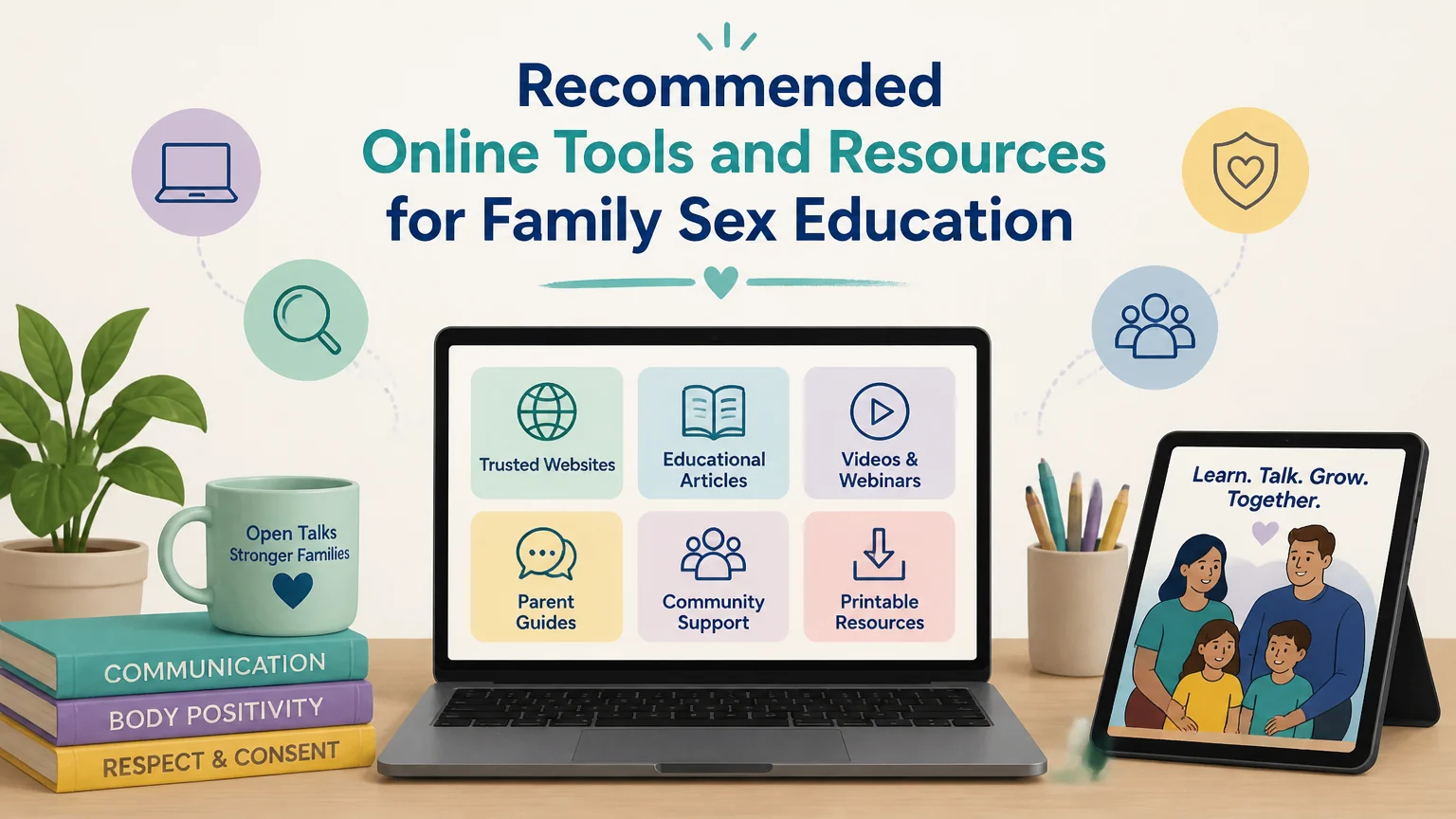
Recommended online tools and resources for family sex education
Utilizing online resources can enhance your approach; discover our helpful course on finding reliable tools for family sex education to support your efforts.
Sex education within the family is an ongoing process that evolves with the age and needs of each child or teenager. Online tools and resources offer support to mothers, fathers, and caregivers: they provide age-appropriate language, fun activities, up-to-date information, and materials that facilitate respectful conversations. Additionally, they allow content to be tailored to each person’s stage of development, family values, and learning pace.
Not all online sources are of the same quality. When selecting resources, it is important to consider:
Each format has its own advantages. Combining multiple formats makes it easier to understand concepts, practice conversations, and address specific questions.
Look for platforms with clear modules and materials for parents. Courses that include dialogue examples and practical exercises are usually the most useful, as they teach both the content and how to approach it. Prioritize those that allow you to progress through levels and include guidance for specific situations, such as abuse prevention or consent education.
Well-designed apps can support learning processes with games, quizzes, and guided activities. Some apps allow you to customize the level of detail based on age and offer reminders to review topics periodically. It’s important to review privacy policies and avoid apps that request unnecessary data.
Videos are effective resources for explaining anatomy, changes during puberty, or concepts related to emotional well-being. It’s best to choose channels that use inclusive and respectful language and present evidence-based information. Short videos make it easier to review specific segments before a family conversation.
Podcasts offer conversations in natural language about complex topics and often include interviews with experts. They can help parents learn while doing other tasks, so they can later apply those ideas to conversations with their children. Look for episodes with practical recommendations and guidelines for talking to children of different ages.
Games make learning easier without creating tension. They can be digital or printable: role-playing activities, question cards, and board games adapted to address boundaries and consent. Activities that promote reflection and empathy help children internalize respectful behaviors.
Parent guides, activity sheets, and brochures written in simple language are excellent for planning conversations. Downloadable materials allow you to adapt examples and practice at home. Choose resources that include sample answers to difficult questions and lists of phrases to start conversations.
Sharing experiences with other families can be very helpful, as long as the groups are moderated by professionals or have clear guidelines. Forums provide practical ideas and recommendations for local resources, as well as emotional support during times of uncertainty.
Sex education shouldn’t be a one-time event, but rather an ongoing conversation. Here are some practical strategies:
At this stage, it’s key to use picture books and simple games that teach the names of body parts, personal boundaries, and the importance of talking to trusted adults. Resources should be brief, visual, and focused on respect for the body.
More explanatory content on physical changes, friendships, and basic concepts of reproduction. Interactive activities and short videos that teach through stories are helpful. Introduce the concept of consent in a practical way using everyday examples.
More complex materials that address sexuality, sexual orientation, gender identity, consent, contraception, and STI prevention. It’s important to provide reliable sources and spaces for private questions. Apps and podcasts can serve as complementary resources, alongside open and nonjudgmental conversations.
Resources that delve deeper into healthy relationships, emotional communication, and self-care. At this stage, it’s helpful to combine practical information with materials that encourage reflection on personal values and boundaries.
Always review the privacy policies of digital tools. Avoid sharing unnecessary personal information and set up parental controls when appropriate. Using resources that incorporate a gender and sexual diversity perspective helps ensure that everyone in the family feels represented and respected.
Incorporating online resources into family sex education facilitates access to clear information, promotes respectful conversations, and helps build relationships based on consent and care. Choosing reliable sources, adapting materials to the child’s age, and maintaining open communication is the best way to support children and adolescents in their development.
Do you prefer learning by watching and listening? Expand your knowledge with these free videos related to this topic.
Learn to distinguish biological anatomy from holistic development and guide family education, integrating body, emotions, identity, and respect for diversity.
Watch VideoYou will learn how emotions and embodiment interact in childhood and how to foster secure bonds that support emotional regulation and healthy relationships.
Watch VideoLearn why traditional schools fail at emotional education, and how close family bonds can guide and protect children from misinformation in today's world.
Watch VideoSearch
Popular searches