7 morning habits for emotional nourishment - emotional nutrition

onlinecourses55.com For Onlinecourses55 | 2026-10-25
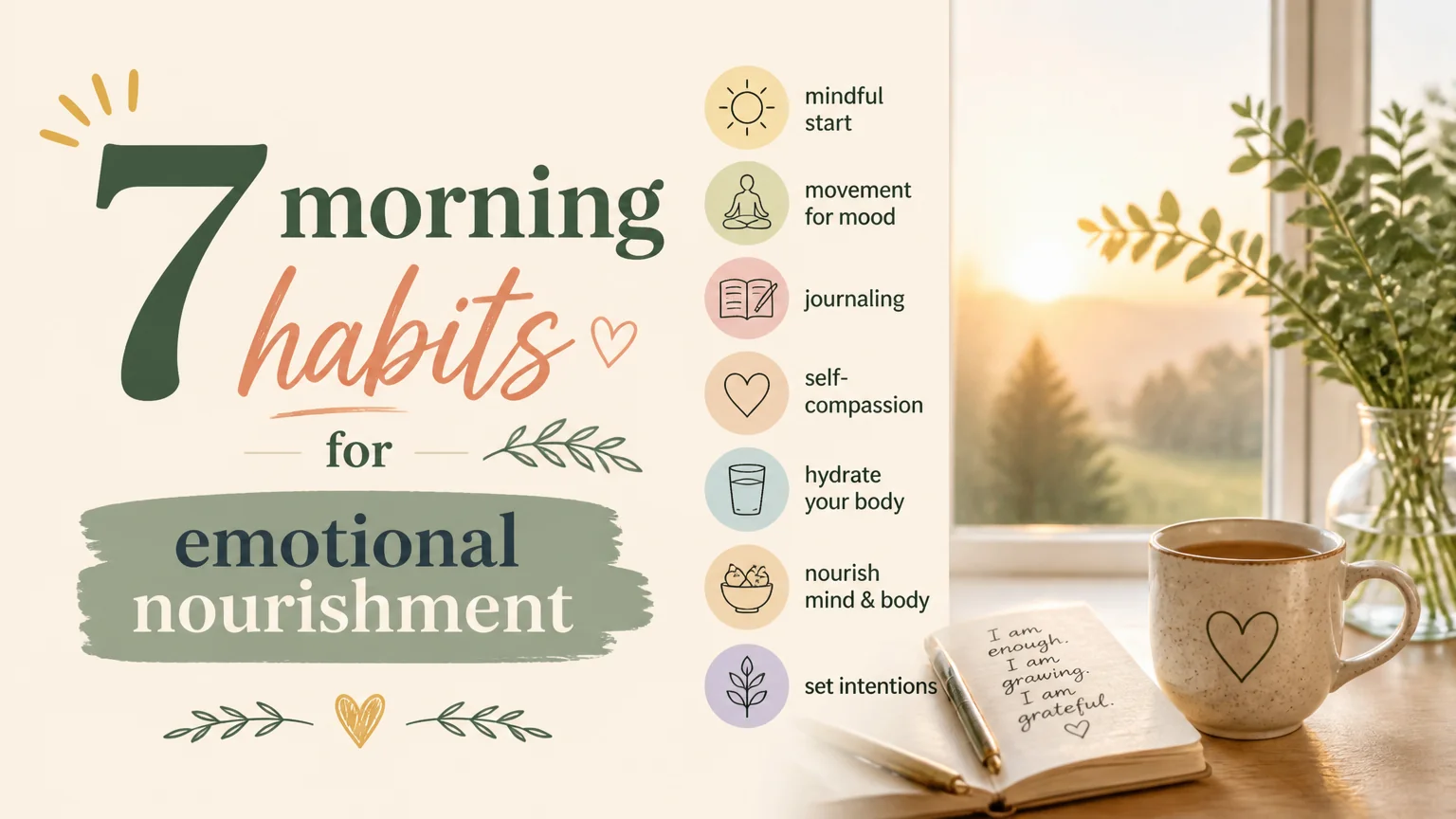
7 morning habits for emotional nourishment - emotional nutrition


7 morning habits for emotional nourishment - emotional nutrition

Shift your mornings toward mindful eating practices that enhance your emotional balance. To learn more about how these small changes can lead to significant well-being, consider enrolling in the program focused on mindful eating and emotional health to receive actionable strategies that truly make a difference.

Starting the day with simple, mindful practices can transform the way we feel and respond to our emotions. Small morning habits act as anchors that allow us to regulate mood, reduce stress and foster a kinder relationship with ourselves. Here are seven practical suggestions, explained in an accessible way and with examples to incorporate them little by little without adding pressure.

1. Conscious breathing upon waking up

Before getting out of bed, taking a minute or two to breathe with attention helps to put the nervous system in a calmer state. Slow, deep breathing reduces stress activation and allows you to start the day from a more stable inner place. It doesn't require equipment or excessive time: just attention and kindness to your body.

How to do it

  • Breathe in slowly through your nose in four breaths, hold for one to two seconds and exhale in six breaths.
  • Repeat 6 to 10 cycles if you have time.
  • If thoughts arise, observe them without judgment and return to the breath.

Benefits

  • Decreases morning anxiety.
  • Improves mental clarity for making decisions early in the day.
  • Activates a sense of body control that promotes emotional regulation.

2. Hydrate and eat breakfast mindfully.

The act of drinking water and choosing foods that nourish the body directly influences the emotional state. Skipping breakfast or consuming ultra-processed foods can increase irritability and reduce stress tolerance. Preparing a drink and a light meal with mindfulness transforms routine into a gesture of self-care.

How to do it

  • Drink a glass of water when you wake up and add lemon if you feel like it.
  • Choose a balanced breakfast: a source of protein, complex carbohydrates and healthy fats.
  • Eat without digital distractions, focusing on flavors, textures and satiety.

Benefits

  • Stabilizes blood sugar and emotional energy.
  • Encourages a more mindful relationship with food, reducing guilt and impulsive eating.
  • Generates a sense of body care that supports emotional well-being.

3. Gentle movement to awaken the body

Moving gently in the morning, whether it's stretching, brief yoga or a short walk, helps to release pent-up tension and connect body and mind. It's not strenuous exercise, but activating circulation and sending safety signals to the brain.

How to do it

  • Do simple stretches: neck, shoulders, spine and legs for 5-10 minutes.
  • Alternatively, take a 10-15 minute walk outdoors if you can.
  • Incorporate movements that you find pleasurable and that respect your body limits.

Benefits

  • Reduces stiffness and minor aches and pains that affect mood.
  • Releases endorphins and improves readiness to face the day.
  • Promotes a sense of body competence and control over one's own health.

4. Set a brief intention or purpose

Taking a moment to decide how you want to relate to the day (e.g., patience, curiosity, presence) orients the mind toward choices consistent with that goal. This practice does not require big goals, but rather an emotional compass that guides daily reactions.

How to do it

  • Choose a word or short phrase that summarizes the intention for the day.
  • Repeat it internally three times or write it on a visible note.
  • If a difficult moment arises during the day, remember the intention and breathe before reacting.

Benefits

  • Reduce impulsive reactions by activating self-regulation.
  • Increases coherence between personal values and daily behavior.
  • Provides meaning and emotional direction.

5. Brief practice of conscious gratitude

Taking a minute or two to remember things for which you are grateful shifts the focus to resources and positive aspects, which does not negate difficulties but balances emotional perception. Morning gratitude works as a counterbalance to automatic negativity.

How to do it

  • Mentally name three specific things for which you feel grateful.
  • Describe why they generate gratitude and pay attention to the sensations in your body.
  • If you prefer, write them down in a notebook to reinforce the habit.

Benefits

  • Increases overall well-being and emotional resilience.
  • Encourages more positive relationships when grateful thoughts are expressed.
  • Reduces rumination and focus on problems.

6. Limit exposure to screens and news at startup.

Checking messages or news as soon as we wake up often triggers anxiety and reactivity. Reserving the first few minutes for internal practices prevents the emotional state from being conditioned by external stimuli. This does not mean avoiding information, but choosing when to be exposed to it.

How to do it

  • Leave your cell phone in another room for the first 30-60 minutes.
  • If you work from home, establish a routine that postpones email and social media until after your morning habits.
  • Use that time for the practices described: breathing, breakfast, movement or intention.

Benefits

  • Prevent reactive states triggered by unexpected news or messages.
  • Improves concentration and initial mental clarity.
  • Allows you to start the day with less external emotional charge.

7. Briefly connect with emotions and label them.

Acknowledging how you feel without judgment decreases the intensity of difficult emotions and allows you to choose more adaptive actions. The practice of naming what is happening internally-sadness, nerves, joy-creates distance and reduces absolute identification with those states.

How to do it

  • Take a minute to ask, "What am I feeling right now?" and name the emotion with one word.
  • Accompany the label with a brief remark such as, "I feel anxiety in my chest" or "I am grateful and calm."
  • Don't try to change the emotion right away; observe it as just another piece of information in the moment.

Benefits

  • Facilitates emotional regulation by putting distance between experience and reaction.
  • Improves interpersonal communication when shared honestly.
  • Reduces polarity between "good" and "bad" emotions, promoting acceptance.

Incorporating these habits does not require perfection: the key is gentle consistency. You can start by integrating one or two and, as they become natural, add another. Over time, these morning actions become an internal resource that promotes real emotional nourishment: more calm, more clarity and a more compassionate relationship with what arises in each day.

Become an expert in Emotional nutrition!

Learn to manage the relationship between emotions and dietary nutrition - Composed of 14 topics and 48 hours of study – available now for only 12,00$.

EXPLORE THE COURSE NOW

Recent Posts


★