For Onlinecourses55
|
2026-10-26
Neuromarketing strategies for long-term customer loyalty - neuromarketing
To nurture customer loyalty through well-designed experiences, implementing principles based on consumer neuroscience is essential; start your journey with this course dedicated to long-term relationship building that enhances brand engagement.
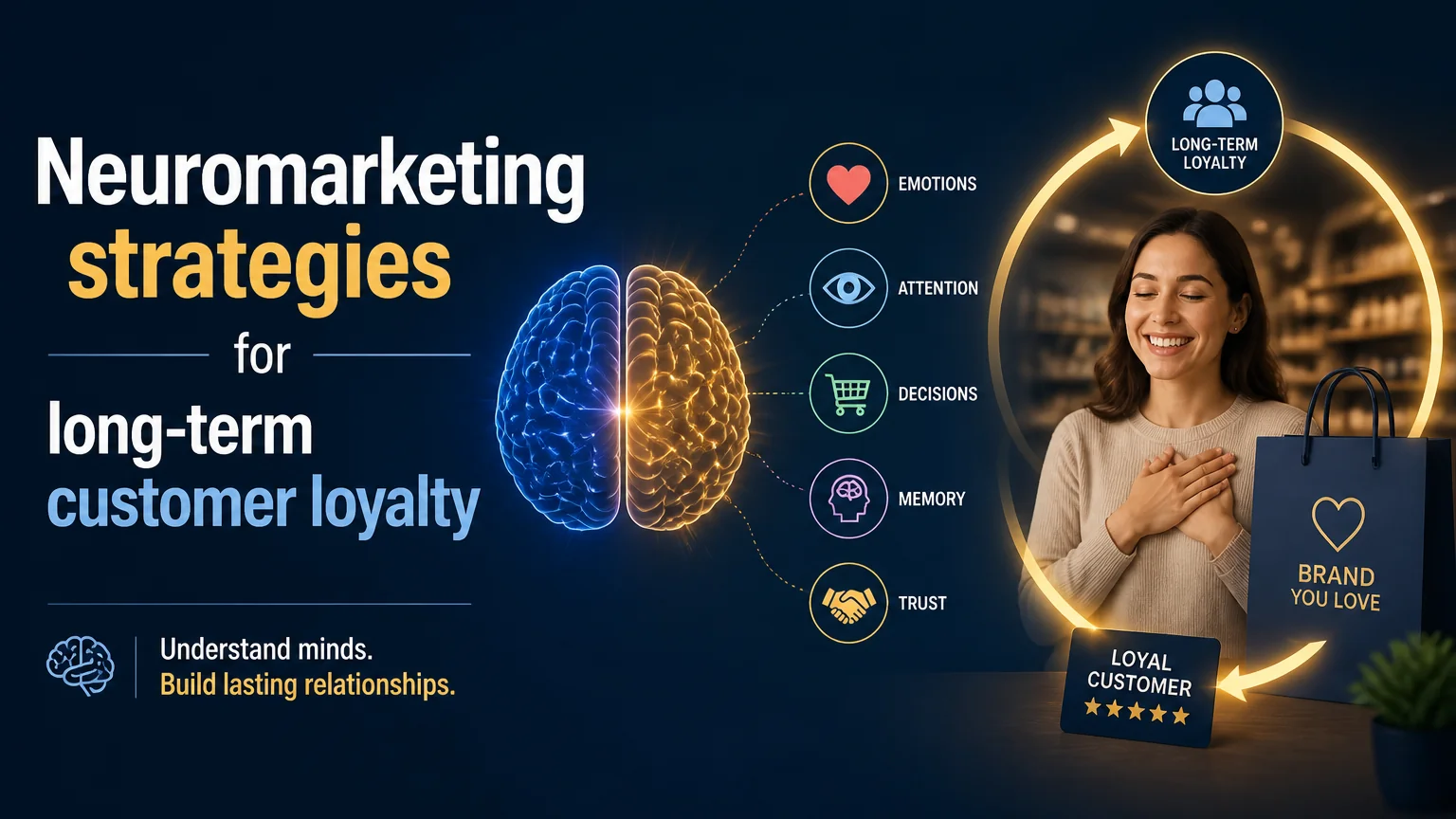
Understanding how customers think and feel allows you to design actions that increase their bond with your brand. Instead of relying solely on one-time promotions, it is better to build experiences that activate cognitive and emotional processes that favor long-term loyalty. The following explains principles based on neuroscience findings applied to marketing and proposes practical tactics for integrating them into the business strategy.
Attention is a limited resource: what stands out perceptually is more likely to be remembered. Designing clear, consistent and contrasting sensory stimuli helps a communication to be processed with less effort and become associated with the brand. Using visual hierarchy, micro-interactions and contextual cues makes it easier for the message to arrive at the right time.
Memory works best when information is repeated in a relevant and varied way. Integrating key messages at different touch points, in different but consistent formats, promotes long-term memory storage. In addition, spaced practice and association with emotions or familiar contexts increase the likelihood of recall.
Emotions modulate the way we evaluate options. Stimuli that generate positive feelings, security or belonging facilitate favorable decisions towards the brand. Conversely, uncertainty and ambivalence tend to block action. Building clear emotional pathways and minimizing friction reduces the probability of abandonment.
Tailoring the sensory experience to the customer profile creates a sense of recognition and relevance. This can range from personalized recommendations to adjustments in message tone, imagery or music across digital and physical channels. The key is to use behavioral data to anticipate needs without being intrusive.
Telling stories that connect with real values and situations helps to humanize the brand. Narratives that show problem solving, authentic testimonials or the social impact of the company activate emotional circuits that facilitate identification and engagement. A good, well-segmented story can transform a transaction into a relationship.
Micro-experiences are small moments of pleasure or relief along the customer journey: an intuitive buying process, a visually appealing confirmation or an unexpected gesture of appreciation. These "small wins" generate immediate rewards that, cumulatively, strengthen positive brand perception.
Loyalty programs work best when they offer rewards that are perceived as valuable and attainable. Designing benefit scales that reward recurrence and increased engagement creates a sense of progress. Supplementing with spontaneous gestures (surprise discounts, early access) activates reciprocity and increases retention.
Showing verified reviews, customer cases and usage data reduces uncertainty. Social proof works as a cognitive shortcut: people trust what others have validated. It is important to present credible testimonials, with details and diversity, and to integrate certificates or seals that provide security in transactions and services.
Sending the message at the right time multiplies its effectiveness. Analyzing the customer's life cycle and mapping critical moments (initial purchase, post-sale, renewal) makes it possible to activate relevant interventions. Proactive messages at times of need, combined with personalized follow-up, increase retention and reduce churn.
To know if actions are working, it is useful to track metrics such as retention rate, customer lifetime value (CLV), repurchase rate, Net Promoter Score and product or service usage metrics. It is also useful to measure physiological or attentional responses in controlled tests to validate hypotheses about specific stimuli.
Implement A/B testing and controlled experiments to isolate which elements generate the most loyalty. Changes in presentation, language, communication sequence or rewards should be evaluated iteratively. Recording learnings and documenting contextual variables helps to replicate successes in different segments.
Building loyalty from an understanding of the brain and behavior comes with responsibility. Avoiding manipulative tactics that exploit vulnerabilities, protecting data privacy and delivering true value are requirements for a healthy and lasting relationship. Transparency in the use of information and clear consent reinforce trust.
Loyalty is not just retention for discount: it is building a relationship based on relevance, emotion and trust. Integrating principles derived from behavioral neuroscience allows designing more effective and sustainable experiences. With a mix of personalization, storytelling, micro-experiences and rigorous measurement, it is possible to increase loyalty in an ethical and scalable way. Starting with small changes and measuring results will allow you to adjust your strategy with confidence and consistency.
Search
Popular searches