For Onlinecourses55
|
2026-11-09
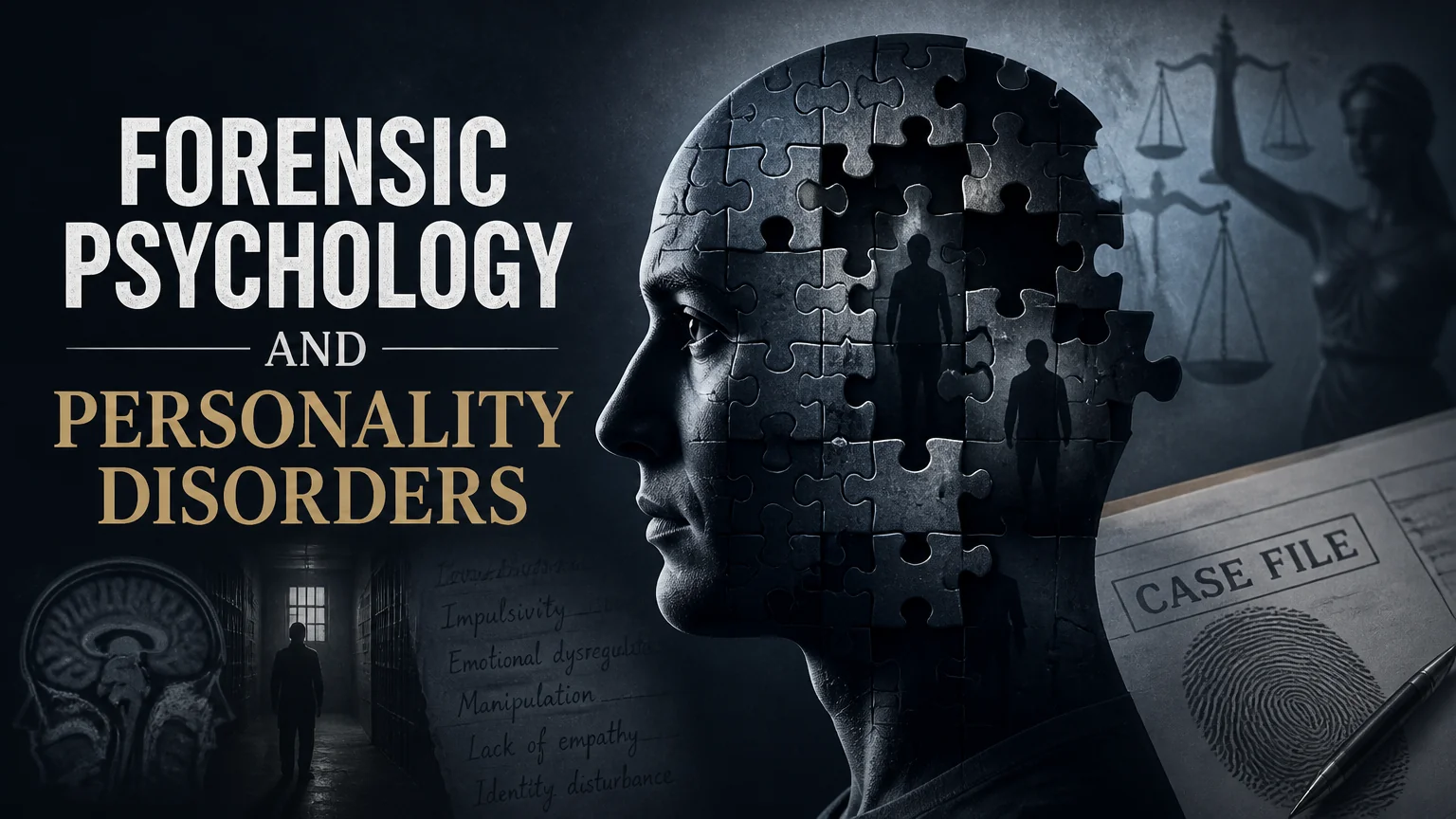
Forensic psychology and personality disorders
Forensic psychology requires an understanding of personality disorders to inform legal contexts. This is why our training course will deepen your insights into personality assessments relevant to legal practitioners and mental health professionals alike.
Understanding how personality traits relate to behavior in legal contexts is key to making fair, evidence-based decisions. The discipline that addresses that intersection is psychology applied to courts, criminal investigation and risk management. Below are outlined concepts, assessment methods, disorders of particular relevance and good practices that help translate clinical complexity into useful conclusions for the justice system.
This specialty applies psychological knowledge to legal matters: criminal responsibility, credibility of testimony, fitness to stand trial, custody and visitation, assessment of psychological harm, prediction and management of risk of violence, among others. The aim is not to "defend" a party, but to answer legal questions with scientific methods, independently and transparently.
These are persistent patterns of perception, thought and behavior that deviate from cultural expectations, are inflexible, begin in adolescence or early adulthood and cause distress or impairment. They do not describe isolated episodes, but stable styles that color relationships and self-regulation.
In forensic practice, group B disorders appear more frequently due to their relation with impulsivity, intense interpersonal conflicts and self-control problems. Even so, any pattern can be relevant depending on the legal question.
A psychological diagnosis does not equal guilt or innocence, nor does it by itself predict violence. What matters to the law is how those traits influenced a specific behavior or a particular capacity.
The assessment combines multiple sources to increase validity and reduce bias. Consistency among data is more important than a single test.
The report should explain methods, limitations, findings and their translation to the legal question in clear, probabilistic language.
They are associated with rule-breaking, impulsivity, deceit and limited empathy. In criminal contexts they may relate to instrumental offenses and recidivism. The label "psychopathy" describes a profile of emotional coldness and a dominant interpersonal style; it is not a separate clinical diagnosis in diagnostic manuals, but its traits increase the risk of instrumental violence and the difficulty of intervention.
Affective instability, fear of abandonment and impulsivity can generate self-harming behaviors and intense conflicts. In family matters, it matters for assessing the capacity to prioritize the well-being of minors and maintain routines. Risk directed at others is not necessarily high; the greater danger is often to the person themself, especially in stressful contexts.
Grandiosity, need for admiration and sensitivity to insult can translate into high litigiousness and difficulty recognizing impact on others. In custody cases, parental empathy and flexibility to negotiate agreements are relevant.
Persistent mistrust can complicate therapeutic alliances and legal processes, favoring malicious interpretations of neutral actions. In civil matters, it affects decision-making when suspicion erodes practical judgment.
Criminal culpability and competence to stand trial are assessed case by case. The presence of a personality disorder alone rarely negates the ability to understand and direct behavior. Concrete functions are analyzed: understanding the process, collaborating with counsel, impulse control at the time of the act, and foreseeability of consequences.
Risk is not a fixed trait; it changes with context. The best estimates combine historical factors (past violence), clinical factors (impulsivity, substance use) and situational factors (access to victims, supervision). Structured tools help organize the evidence and plan management.
In adversarial contexts, some people may exaggerate or minimize symptoms. Forensic evaluation takes this possibility into account with effort indicators, longitudinal consistency and documentary corroboration. Credibility is not decided by "gut feelings", but by consistency among what is said, what is observed and the records.
The aim is not to "cure" personality, but to reduce harm, improve skills and prevent behavioral relapse. The most effective programs are structured, with clear goals and repeated practice.
In prison settings and alternative measures, adherence improves when goals are realistic, progress is reinforced and substance use is addressed in parallel.
Expert work requires independence, technical competence and clear communication. It is essential to avoid stigmatizing language, separate facts from inferences and acknowledge limits of certainty. Methodological transparency and use of accepted criteria for admissibility of expert evidence strengthen the usefulness of the report.
Personality disorders are stable styles that, in certain contexts, complicate self-control, empathy or relationships. In legal settings, what matters is their functional impact: how they influence concrete decisions and behaviors, and what risk they pose under given conditions. Rigorous forensic assessment triangulates information, assesses credibility and translates complex findings into clear, useful answers. With skill-focused interventions, adequate supervision and proportionate judicial decisions, harm can be reduced and the safety and well-being of those involved can be improved.
Do you prefer learning by watching and listening? Expand your knowledge with these free videos related to this topic.
Search
Popular searches