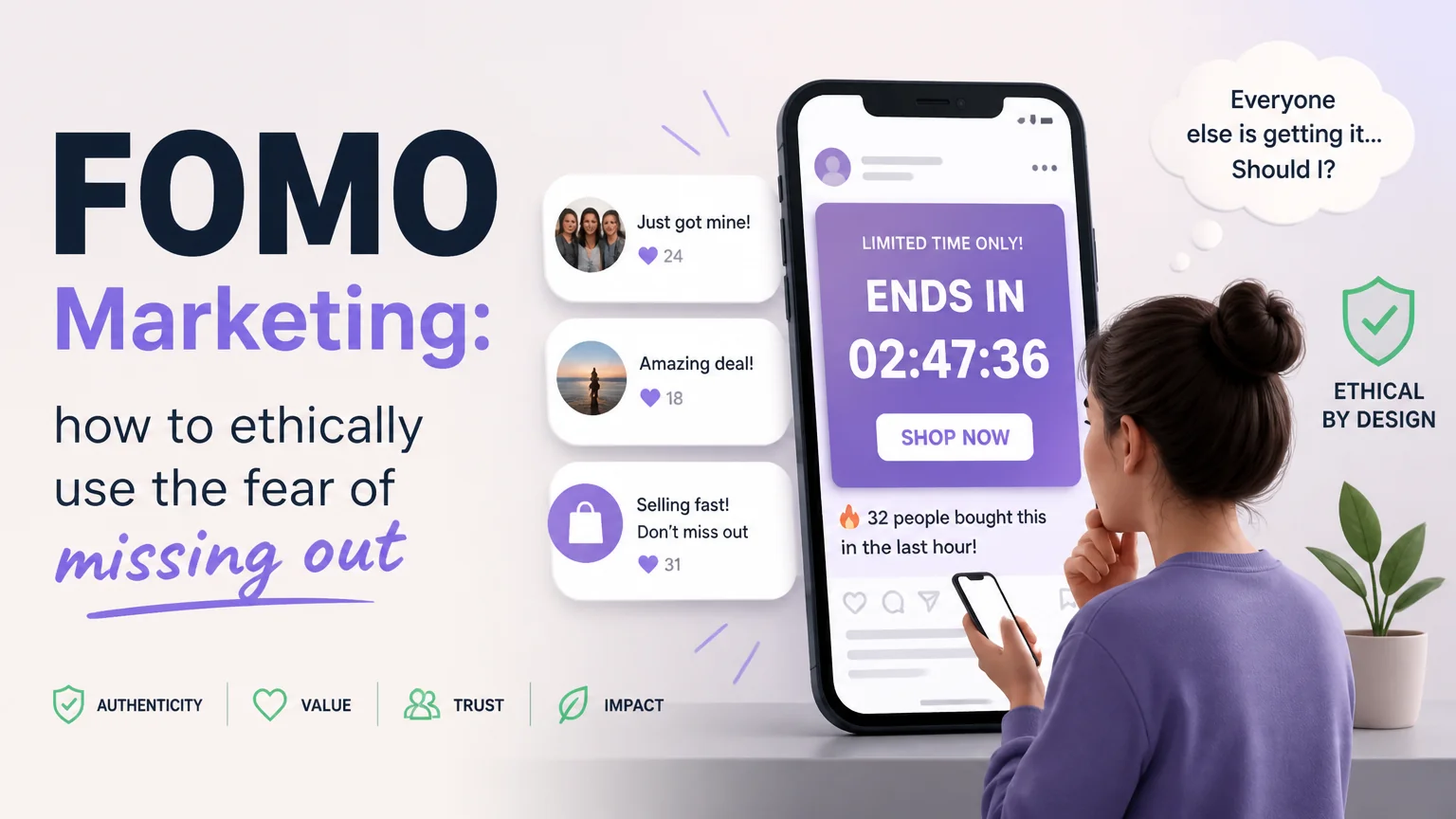
Discover how to responsibly leverage the fear of missing out in your strategies; learn to create genuine urgency by enrolling in a course on marketing psychology principles that drive action without deceit.
What FOMO in marketing is and why it works
Fear of missing out is a powerful psychological lever because it connects with very human cognitive biases. In marketing, it is used to highlight limited opportunities, new releases, or community movements that could be missed if action isn't taken in time. The ethical key is to present those opportunities as they are, without exaggerating or fabricating them. When done well, it helps make decisions clearly; when done poorly, it erodes trust and the brand pays the price in the long term.
- Loss aversion: it hurts more to lose than to gain the same.
- Social proof: if others act, we interpret that there is value.
- Scarcity: limited things seem more valuable.
- Urgency: a deadline limits indecision and facilitates action.
Using these principles responsibly means aligning expectations and outcomes, and allowing the person to retain control of their decision at all times.
Ethical limits: principles to avoid crossing the line
A simple framework helps operate coherently. Ethics in this context are not abstract: they are reputation, legal compliance and long-lasting customer relationships. Before launching any action, contrast it with the following principles and document evidence.
- Verifiable truthfulness: every message must be verifiable with data.
- Proportionality: the pressure should not exceed the relevance of the benefit.
- Full clarity of terms: prices, seats, dates and restrictions visible.
- Authentic scarcity: never invent low stock or artificial deadlines.
- User autonomy: opt-in, easy opt-out and no coercion.
- Do not exploit vulnerabilities: avoid targeting sensitive groups with anxiety-inducing messages.
- Reversibility: offer a reasonable guarantee and accessible support.
Benefits and risks when implementing this lever
When applied rigorously, this strategy accelerates decisions without forcing them and improves conversion at key moments. Misused, it increases cancellations, complaints and brand damage.
- Benefits: focus, clarity of value, higher response rate, organic growth through social proof.
- Risks: fatigue from constant urgency, perception of manipulation, returns, churn and regulatory audits.
Ethical tactics step by step
Authentic scarcity
Scarcity must arise from the operating model. If there are 100 units because production is limited, say it and show it. If there is a quota by schedule or by licenses, explain why. Avoid generic messages that sound like a trick.
- Real-time inventory with periodic recalculation.
- Limited editions with serial numbers and estimated restock date.
- Reservations with a quota and a public waiting list.
- Visible schedule of slots by time window.
Urgency with transparency
A time limit serves to order decisions. Indicate when the price changes, when registration closes or when a bonus expires. Whenever the deadline ends, respect it without exceptions.
- Real countdown that stops when finished, without hidden restarts.
- Dates and times with time zone and clear reminders.
- Launch windows with announced reopenings, if applicable.
- Price changes scheduled and documented in the history.
Responsible social proof
Showing that others participate reduces uncertainty, but it must be done honestly. Avoid inflated amounts or unverified reviews. Give context so the audience can compare cases similar to theirs.
- Verified reviews with name, industry and realistic expected outcome.
- Moderated activity indicators (people viewing, recent sales) with honest sampling.
- User-generated content with explicit permission.
- Use cases that show limits and scenarios where it doesn't fit.
Exclusivity by membership
Healthy exclusivity is based on community, learning or early access, not on provoking anxiety. Design benefits that provide sustained value and explicit access criteria.
- Beta programs with feedback that impacts the product.
- Communities with mentoring and unique resources, not just discounts.
- Tiered access by loyalty or contribution, not by paying faster.
Copy that informs, not intimidates
Words matter: avoid veiled threats. Explain what opportunity exists, why it is limited and what happens if it is not taken, without dramatizing. Offer alternative paths.
- 48 hours left to access the presale price. It returns to the standard price afterward.
- 12 spots available this month due to support capacity.
- The next cohort opens in six weeks. You can join the notification list.
- Onboarding bonus available until Sunday. You can still buy later, without the bonus.
Applications by channel
Website and landing pages
Integrate signals of scarcity and urgency alongside the value, not as a distraction. Avoid elements that block reading or repeat on every scroll.
- Info bar with end date and link to terms.
- Stock or slots module with periodic updates.
- Section of verified reviews with selection criteria.
Email and notifications
Short, clear sequences work better than a bombardment. Segment by interest and behavior to avoid saturation.
- Three-message series: announcement, reminder and last notice.
- Subject lines with concrete data and no alarmism.
- Visible unsubscribe links and frequency preference.
Social media and events
Use time windows for calls and share real progress. Avoid permanent timers in every post.
- Behind-the-scenes content during the launch.
- Live testimonials with real questions.
- Stories reminders on the last day with clear conditions.
Metrics to evaluate without damaging the brand
Measure the immediate response and the side effects. A rise in revenue with an increase in complaints is not sustainable success.
- Conversion rate by cohort and by channel.
- CTR and response rate per message.
- Cancellations, returns and refunds.
- Churn and retention at 30, 60 and 90 days.
- Support complaints and sentiment in comments.
- Unsubscribes and spam complaints.
- NPS or post-purchase satisfaction survey.
- Purchase frequency after the launch.
Quick checklist before launching
- Scarcity and urgency are documented with data.
- Terms are clear and visible throughout the journey.
- The message describes benefits and limits without exaggeration.
- The countdown and quotas work and are respected when they end.
- There is a future alternative or notification list for those who miss it.
- Support ready for demand spikes and FAQs.
- Segmentation and frequency defined to avoid saturation.
- KPIs and brand health thresholds established.
- Postmortem and learning plan prepared.
- Legal compliance reviewed (advertising, consumer, data).
Common mistakes that destroy trust
- Deadlines that are restarted over and over.
- Fictitious stock or slots without operational backing.
- Vague or unverifiable testimonials.
- Aggressive timers that hide key information.
- Promises of guaranteed results for everyone.
- Permanent urgency that desensitizes the audience.
- Not honoring the price change or the announced conditions.
Mini use cases
The same logic adapts to different sectors while maintaining the ethical standard.
- B2B software: 25 slots in a pilot program with dedicated support. It closes when full to guarantee quality.
- Ecommerce: limited edition with numbered pieces and estimated restock in 90 days. Notification list for the next batch.
- Training: quarterly cohorts with a closing date and an initial tutoring bonus limited by schedule.
- Events: room capacity limits, tiered pricing by date range and clear refunds up to a specific cutoff.
Seven-day implementation plan
- Day 1: define the offer, unique value proposition and real capacity limits.
- Day 2: write messages with concrete data and visible terms.
- Day 3: set up website, stock modules and verified countdown.
- Day 4: prepare verified reviews and representative use cases.
- Day 5: segment the audience and schedule sequences by channel.
- Day 6: end-to-end technical test and close simulation.
- Day 7: launch, live monitoring and support response plan.
Brief frequently asked questions
Does it work in B2B environments?
Yes, if the urgency arises from schedules, budget cycles or programs limited by support. The emphasis should be on opportunity cost and fit, not on emotional pressure.
How to avoid saturation?
Use time windows a few times a year, with clear pauses. Segment by intent, alternate educational value messages and measure fatigue with unsubscribes and complaints.
Is it legal in my country?
Consult advertising and consumer protection regulations, as well as data regulation. Avoid misleading claims and ensure opt-in and easy unsubscribe in commercial communications.
Ultimately, this lever works best when it is precise, limited and transparent. If the promise is true, urgency only helps the decision happen when it makes sense. If it is not, urgency accelerates disenchantment. Ethics, in addition to being correct, is a competitive advantage.
 For Onlinecourses55
|
2026-10-21