Why certain words influence decisions so much
Not all words carry the same weight when you persuade. Some trigger mental shortcuts related to emotion, curiosity, reward-seeking or risk reduction. When they appear, the brain saves effort, predicts benefits and decides faster. This is not magic: it responds to biases such as loss aversion, preference for immediacy and attraction to what is new and socially validated.
The key is not only the word, but the context: the brain responds better to concrete, sensory messages that are easy to process and have a clear benefit. That’s why a power word works when it reduces friction, makes value more tangible and guides the next step without ambiguity.
Mental triggers and practical vocabulary
Safety and control
Decisions speed up when perceived risk drops. The brain relaxes when it feels it gains control and that the worst is covered.
- Keywords: “guaranteed”, “secure”, “protected”, “risk-free”, “private”, “confidential”, “backup”, “certified”.
- Example: “Risk-free trial for 30 days: 24/7 backup”.
Novelty and curiosity
Novelty activates reward and attention systems. The promise to reveal something “hidden” invites the click.
- Keywords: “new”, “discover”, “secret”, “revealed”, “inside”, “before anyone else”, “first”, “surprising”.
- Example: “Discover the method revealed by experts, explained from the inside”.
Reward and immediacy
The brain prefers clear, near-term benefits. Immediacy reduces procrastination.
- Keywords: “free”, “bonus”, “savings”, “reward”, “exclusive”, “instant”, “right away”, “immediate access”.
- Example: “Immediate access + exclusive bonus for signing up today”.
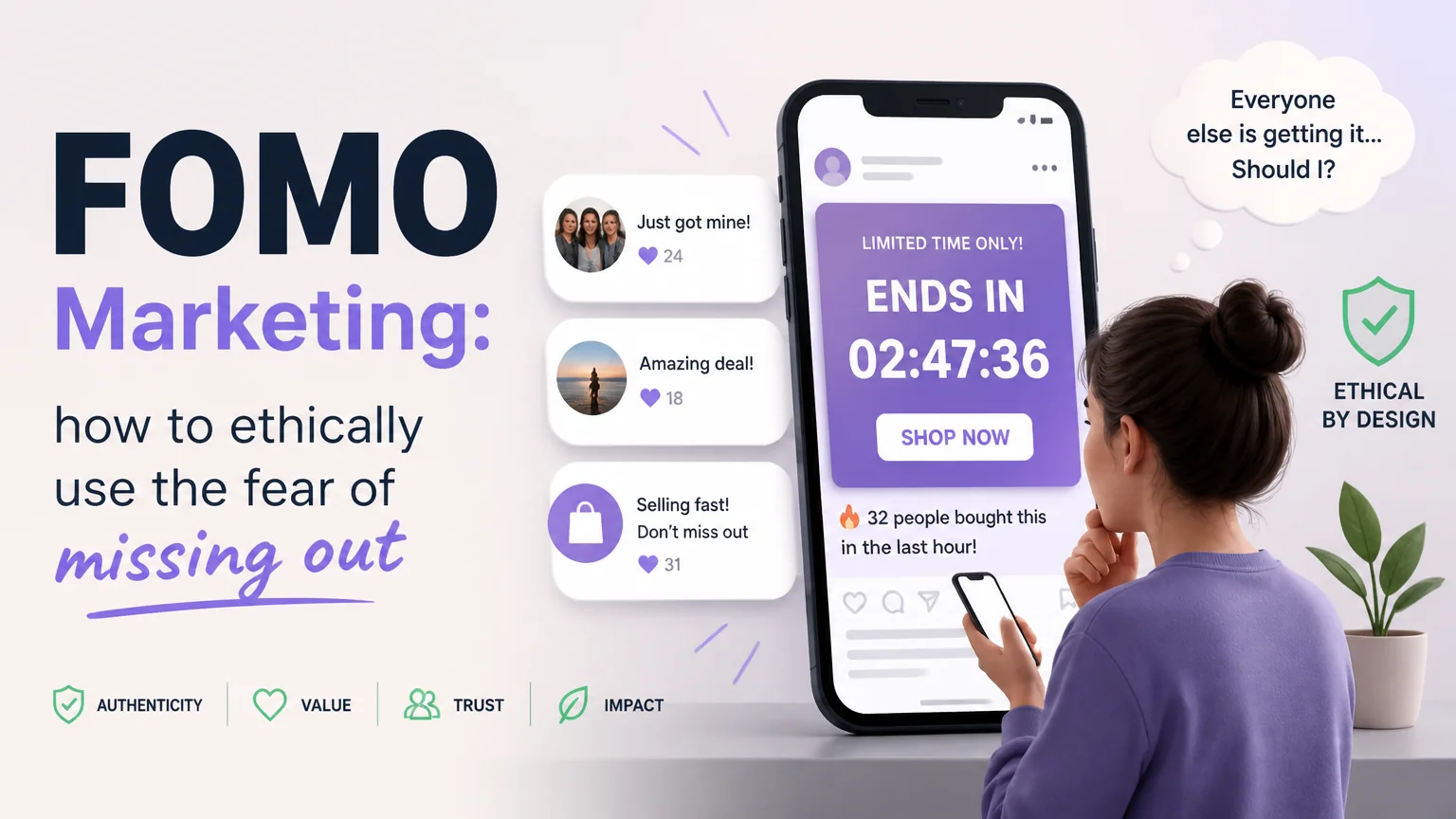
Urgency and scarcity
When there is a real limit, action increases. Use it responsibly so as not to erode trust.
- Keywords: “last spots”, “limited time”, “closes today”, “expires”, “few left”, “until midnight”.
- Example: “7 spots left: registration 40% off until midnight”.
Belonging and status
Social identity guides decisions. Feeling part of something or recognized activates deep motivations.
- Keywords: “community”, “members”, “elite”, “preferred”, “private collection”, “by invitation”, “trend”.
- Example: “Join the private community: access by invitation”.
Simplicity and clarity
The less cognitive effort, the more responses. The promise of ease reduces friction.
- Keywords: “easy”, “fast”, “simple”, “step-by-step”, “no hassle”, “in minutes”.
- Example: “Set everything up in 5 minutes, step-by-step”.
Social proof and authority
External validation reduces uncertainty: “if it works for others, it will probably work for me”.
- Keywords: “verified”, “endorsed”, “recommended”, “No. 1”, “more than X”, “real cases”, “award-winning”.
- Example: “Recommended by over 12,000 verified professionals”.
Loss reduction
Loss aversion is stronger than the pursuit of gain. Minimizing perceived cost drives the yes.
- Keywords: “return”, “no commitment”, “cancel anytime”, “free trial”, “keep your progress”.
- Example: “Free 14-day trial. Cancel anytime, no commitment”.
How to integrate these words into copy without sounding forced
Headlines and subject lines
- Template 1: “Discover [specific benefit] in [concrete time]”
- Template 2: “[Number] secrets to [result] without [objection]”
- Template 3: “Last spots: [result] with immediate access”
- Template 4: “What [reference group] uses to [result]”
Applied example: “7 secrets to double your open rate without increasing budget”. Concise phrases, a main benefit and a neutralized objection.
Calls to action
- “Start now”
- “Get immediate access”
- “Reserve your spot today”
- “Free 14-day trial”
- “Download the exclusive bonus”
The ideal combination: action verb + near-term benefit +, if applicable, real urgency. Example: “Start now: save 30% today”.
Descriptions and benefits
Turn features into benefits with sensory, clear language. Instead of “panel with multiple integrations”, try “Connect your favorite tools in minutes, no hassle”. The change reduces mental load and increases the desire to move forward.
Ethics and best practices
- Relevance first: don’t use power words if they don’t provide real value.
- Consistency: if you promise “immediate”, make sure access is truly immediate.
- Honest urgency: real and verifiable deadlines.
- Specificity: concrete numbers beat generic adjectives.
- A/B testing: not all audiences react the same; validate variations.
- Brand voice: adjust tone (warm, technical, premium) to the identity.
- Context: the right word in the right place (subject line, CTA, testimonial) multiplies its effect.
Common mistakes and how to avoid them
- Overusing “free” or “exclusive”: it loses credibility. Use them when literal.
- Vague promises: “the best” says nothing without evidence. Add proof or numbers.
- Contradictions: “risk-free” alongside confusing processes creates distrust.
- Trigger saturation: too many at once cancel each other out. Prioritize one main and one secondary.
- Ignoring objections: accompany power words with clear guarantees.
Applied examples
B2B software
Before: “Analytics platform with multiple features.”
After: “Activate ready-made reports in 10 minutes, no hassle. Free 14-day trial and cancel anytime.”
Ecommerce
Before: “High-quality sports sneakers.”
After: “Immediate comfort and secure grip from the first use. Fast shipping and hassle-free returns for 30 days.”
Online training
Before: “Digital marketing course.”
After: “Master profitable campaigns with a step-by-step plan. Immediate access, private community and 30-day money-back guarantee.”
Quick checklist before publishing
- Is the main benefit clear in the first line?
- Do you include a coherent trigger (safety, novelty, urgency, social proof)?
- Does your CTA combine action + immediacy + benefit?
- Are there numbers or concrete proofs that back the promise?
- Did you reduce risk with a guarantee, trial or no commitment?
- Is the language simple and easy to scan?
- Is the urgency real and verifiable?
Expanded list of power words by intent
Immediate conversion
- “now”, “today”, “last”, “in minutes”, “ready”, “activate”, “access”, “start”
Trust and security
- “guarantee”, “backup”, “certified”, “verified”, “private”, “protected”, “secure”
Savings and value
- “savings”, “discount”, “bonus”, “2-for-1”, “special price”, “no cost”, “free”
Curiosity and novelty
- “new”, “secret”, “revealed”, “discover”, “insider”, “inside”, “limited edition”
Belonging and status
- “members”, “community”, “elite”, “preferred”, “VIP”, “by invitation”, “trend”
Simplicity and speed
- “easy”, “fast”, “simple”, “no hassle”, “step-by-step”, “plug and play”
Risk reduction
- “no commitment”, “cancel anytime”, “return”, “free trial”, “no card”
Small formulas to try
- “[Action verb] [benefit] in [short time], without [objection]”
- “[Number] ways to [result] with immediate access”
- “[Benefit] guaranteed or [type of refund]”
- “Join [group] and get [result] today”
Remember: choose one or two main triggers according to the user’s journey stage. In discovery, prioritize curiosity and novelty. Close to purchase, raise safety, social proof and risk reduction. With constant testing, your own set of power words will emerge with data, not assumptions.
 For Onlinecourses55
|
2026-09-06
For Onlinecourses55
|
2026-09-06