For Onlinecourses55
|
2026-10-02
For Onlinecourses55
|
2026-10-02
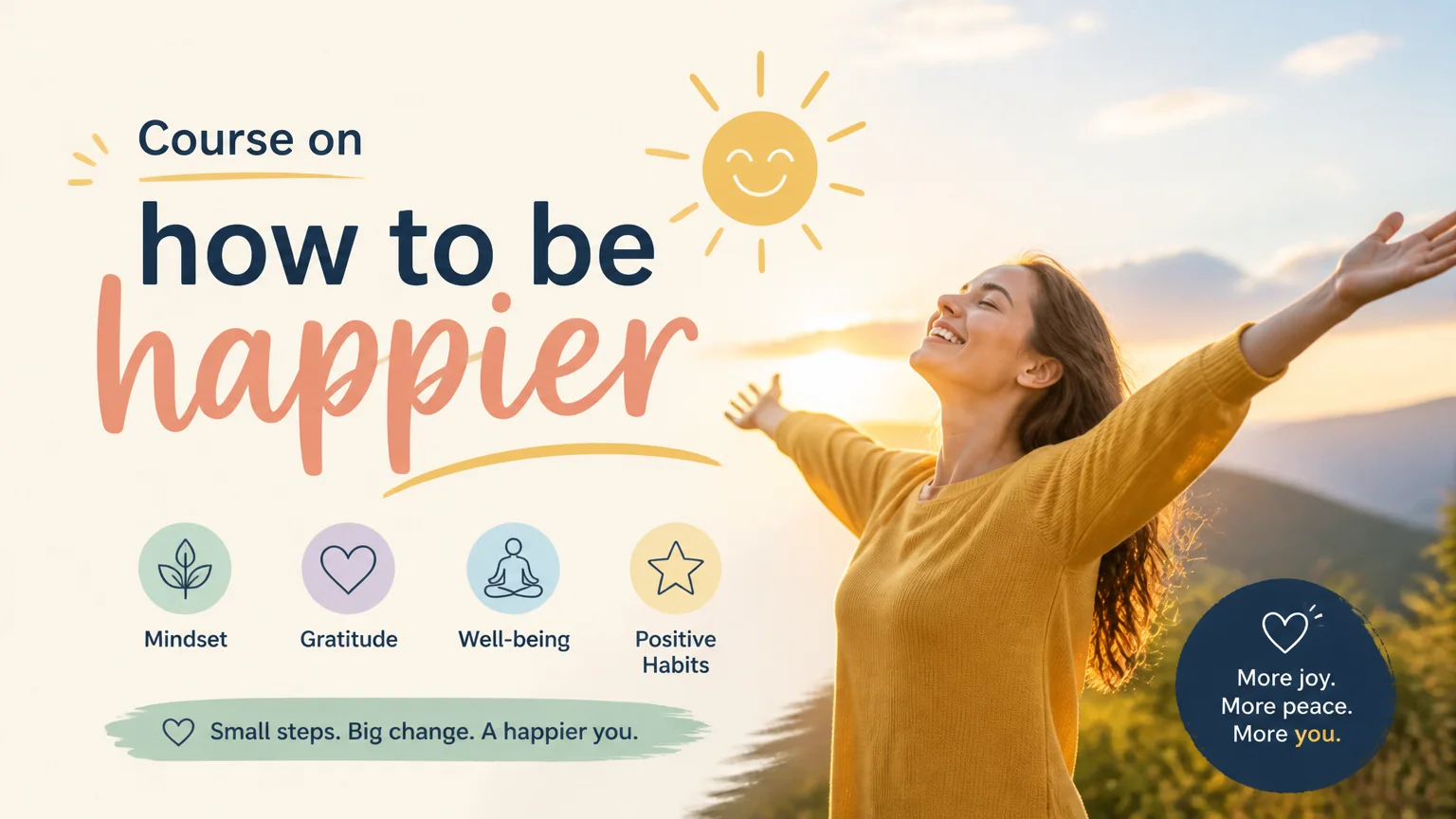
Course on how to be happier - quality life
To achieve deeper happiness and satisfaction in life, you might find that this enriching course about inner contentment is precisely what you need.
Have you ever wondered what it takes to be truly happy? I''m not talking about that fleeting happiness that comes with an ice cream or a day off, but a deep, sustainable happiness that stays with you even in difficult times. If the answer is yes, you are in the right place. This article is your intensive course to be happier, a complete and practical guide to transform your life from the inside out.
Happiness is not a destination to be reached, but a continuous journey. Nor is it a constant emotion of overflowing joy. Happiness, in its essence, is a state of general well-being, a feeling of satisfaction with life, of purpose, and of connection with something greater than ourselves.
It is important to demystify some misconceptions about happiness:
It is not the absence of problems: We all face challenges, but happiness lies in how we face them.
It is not having everything: The constant search for material possessions does not guarantee happiness. In fact, it can generate anxiety and frustration.
It is not an unattainable goal: Happiness is built day by day, with small actions and changes in perspective.
One of the fundamental pillars of happiness is gratitude. Being grateful for what we have, instead of focusing on what we lack, radically changes our perspective. Why does it work? Because it helps us to:
Appreciate the good things in our lives: Sometimes, we take the good things around us for granted. Gratitude reminds us of their value.
Reduce envy and comparison: By being grateful for what we have, we reduce the need to compare ourselves with others.
Strengthen our relationships: Expressing gratitude to others strengthens bonds and creates a positive environment.
Keep a gratitude journal: Every day, write down three things you are grateful for.
Express your gratitude to others: Tell someone you appreciate what they do for you.
Reflect on the good things in your life: Spend a few minutes each day thinking about what makes you happy.
Human beings are social beings. Meaningful relationships are essential for our happiness and well-being. But it''s not about having many friends, but about having authentic relationships, based on trust, respect, and mutual support.
Invest time in the people who matter to you: Dedicate quality time to your friends and family.
Be a good listener: Pay attention to what others have to say and show genuine interest.
Be honest and vulnerable: Share your thoughts and feelings with the people you trust.
Set healthy boundaries: Learn to say "no" and to protect your time and energy.
Having a purpose in life, something that motivates us and gives us meaning, is fundamental to happiness. This purpose does not have to be something grand or heroic. It can be something as simple as helping others, creating art, or learning something new.
Reflect on your values: What really matters to you?
Think about your passions: What do you love to do? What makes you feel alive?
Consider your talents: What are you good at? What can you contribute to the world?
Try new things: Step out of your comfort zone and try different activities.
Our thoughts have a huge impact on our emotions and our perception of reality. Cultivating a positive mindset does not mean ignoring problems, but focusing on solutions and opportunities.
Challenge your negative thoughts: Ask yourself if they are really true and if there is another way to see the situation.
Replace negative thoughts with positive ones: Focus on the good, on what you can control, and on what you can learn.
Practice self-compassion: Be kind to yourself, especially in difficult times.
Surround yourself with positive people: Positive energy is contagious.
Happiness is not just a mental state, it is also a physical state. Taking care of our body is essential for our emotional well-being. This includes:
A healthy diet: Eat nutritious foods that give you energy and make you feel good.
Regular exercise: Move, even if it''s just a little, every day. Exercise releases endorphins, which have a positive effect on our mood.
Adequate rest: Get enough sleep so that your body and mind can recover.
Hydration: Drink enough water throughout the day.
The past is gone and the future is uncertain. Happiness is found in the present. Learning to live in the present, to enjoy the moment, is a fundamental skill for happiness.
Practice mindfulness: Pay attention to your thoughts, feelings, and physical sensations without judging them.
Enjoy the little things: Savor your morning coffee, watch a sunset, listen to your favorite music.
Stop worrying about the future: Focus on what you can do today to build a better future.
Accept the past: Don''t hold on to past mistakes. Learn from them and move on.
The pursuit of perfection is a trap. Perfection does not exist. Accept your imperfections, your mistakes, and your flaws. They are part of what makes you unique.
Be kind to yourself: Don''t criticize yourself harshly for your mistakes.
Learn from your mistakes: Use your mistakes as opportunities to grow and improve.
Celebrate your achievements: Acknowledge your successes, no matter how small.
Share your experiences: Connect with others and realize that you are not alone in your struggles.
The digital world can be a source of stress and anxiety. Spending too much time on social media, comparing ourselves to others, can negatively affect our happiness.
Set time limits: Limit the time you spend on social media and the internet.
Turn off notifications: Avoid the temptation to constantly check your phone.
Dedicate time to offline activities: Read a book, take a walk in nature, spend time with your loved ones.
Create tech-free spaces: For example, don''t use your phone at the dinner table.
We often forget to take care of ourselves, putting the needs of others before our own. Self-care is not selfish, it is essential for our happiness and well-being.
Make time for activities you enjoy: Do something that relaxes you, entertains you, and makes you feel good.
Learn to say "no": Don''t commit to things you don''t want to do or that exhaust you.
Set healthy boundaries: Protect your time and energy.
Seek professional help if you need it: Don''t be afraid to ask for help if you are struggling with anxiety, depression, or any other mental health issue.
Happiness is a personal and unique journey. There is no magic formula that works for everyone. But by applying the principles and strategies we have explored in this course, you can unlock your potential for happiness and live a more fulfilling and meaningful life. Remember that happiness is not a destination, but a path, and that every small step you take in the right direction brings you closer to it. Start today and discover the power you have to create your own happiness.