For Onlinecourses55
|
2026-10-09
For Onlinecourses55
|
2026-10-09
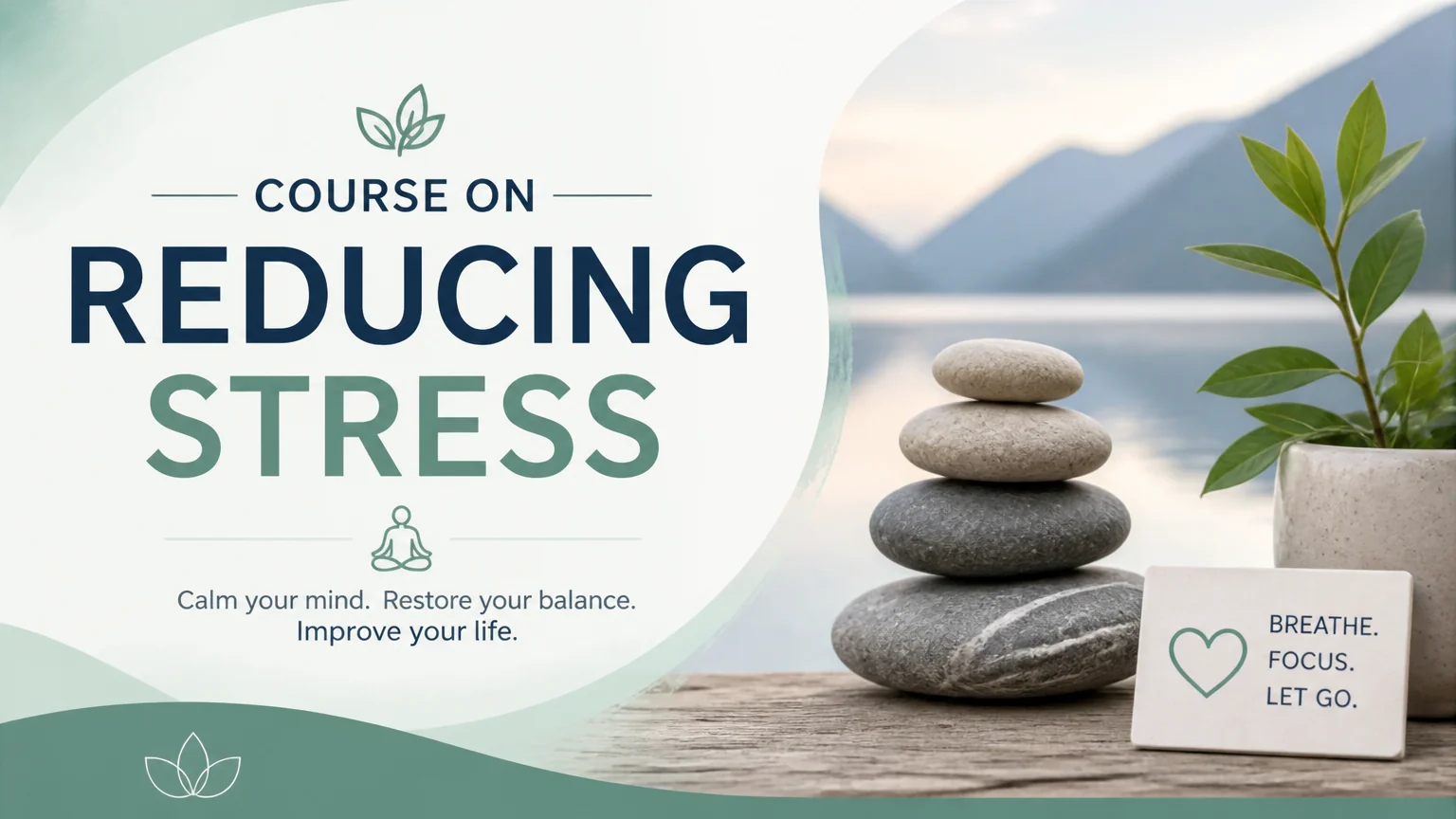
Course on reducing stress - quality life
If you're feeling the weight of stress and chaos in your life, consider enrolling in a stress management course that equips you with essential techniques to regain your calm.
In today''s busy world, stress has become a constant companion for many of us. From work pressures to family responsibilities and the constant notifications on our phones, there always seems to be something keeping us on the verge of collapse. But what if I told you that you can learn to manage stress effectively and regain calm in your life?
This article is a complete guide to understanding stress, its effects, and, most importantly, how to reduce it through a course designed to provide you with the necessary tools and techniques. Get ready to transform your life and say goodbye to chronic stress!
Stress is our body''s natural response to any demand or challenge. When we feel threatened, whether physically or emotionally, our body releases hormones like cortisol and adrenaline, which prepare us to fight or flee. In specific situations, this mechanism is useful and helps us react quickly. However, when stress becomes chronic, it can have devastating effects on our physical and mental health.
Modern life is full of stressors: long work hours, financial problems, conflictive relationships, uncertainty about the future... All of this contributes to stress being a common experience for most people.
Living constantly under stress can negatively affect your health in many ways. Some of the most common effects include:
Sleep problems: Difficulty falling asleep, insomnia, or interrupted sleep.
Digestive issues: Indigestion, heartburn, irritable bowel syndrome (IBS).
Headaches and migraines: Tension in the neck and head muscles.
Weakened immune system: Greater susceptibility to illnesses and infections.
Cardiovascular problems: Increased blood pressure, risk of heart disease.
Mood disorders: Anxiety, depression, irritability.
Concentration and memory problems: Difficulty focusing and remembering things.
It is crucial to address stress proactively to prevent these problems and improve your quality of life.
There are many resources available to reduce stress, such as books, online articles, and mobile apps. However, a structured course offers significant advantages:
Systematic learning: A course guides you through a step-by-step process, ensuring you gain a complete understanding of stress and its mechanisms.
Proven techniques: Quality courses are designed by experts and use evidence-based techniques to help you manage stress effectively.
Support and motivation: Many courses offer the opportunity to interact with other students and receive support from an instructor, which can increase your motivation and commitment.
Long-term results: A course provides you with the necessary tools and skills to manage stress sustainably, not just as a quick fix.
A comprehensive course to reduce stress should cover the following topics:
Diaphragmatic Breathing: A simple yet powerful technique to activate the parasympathetic nervous system and promote relaxation. It involves breathing deeply from the abdomen, rather than shallowly from the chest.
Mindfulness Meditation: Learning to pay attention to the present moment without judgment. Mindfulness meditation helps you reduce mental noise, focus on what is important, and cultivate a greater sense of calm and well-being.
Progressive Muscle Relaxation: A technique that involves tensing and relaxing different muscle groups to release accumulated tension in the body.
Guided Visualization: Using your imagination to create positive and relaxing mental images that help you reduce stress and anxiety.
Cognitive Restructuring Techniques: Learning to identify and challenge negative thoughts and replace them with more realistic and positive ones.
With so many options available, choosing the right course can be overwhelming. Here are some tips to help you make an informed decision:
Research the instructor: Find out about the instructor''s experience and qualifications. Are they certified in stress management or a related field?
Read reviews and testimonials: Look for reviews from other students to get an idea of the course''s quality.
Consider the format: Do you prefer an online, in-person, or hybrid course? Choose the format that best suits your learning style and schedule.
Review the course content: Make sure the course covers the topics you are interested in and meets your specific needs.
Ask about support: Does the course offer additional support, such as Q&A sessions or access to a discussion forum?
Consider the price: Compare prices and look for options that fit your budget.
In addition to the physical and mental health benefits, learning to manage stress can have a positive impact on other areas of your life:
Improved relationships: Reducing stress can improve your ability to communicate effectively, resolve conflicts, and connect with others.
Increased productivity: By reducing stress, you can concentrate better on your tasks and be more productive at work and at home.
Greater creativity: Stress can inhibit creativity. By reducing it, you can unleash your creative potential and find new solutions to problems.
Greater resilience: Learning to manage stress makes you more resilient, meaning more capable of recovering from difficulties and overcoming challenges.
Greater happiness and well-being: Ultimately, reducing stress allows you to enjoy life more and experience a greater sense of happiness and well-being.
Beyond taking a course, there are small changes you can implement in your daily routine to reduce stress:
Establish a sleep routine: Try to go to bed and wake up at the same time every day, even on weekends.
Exercise regularly: Exercise is an excellent stress reliever. Try to get at least 30 minutes of moderate physical activity most days of the week.
Fuel your body with healthy food: Avoid processed foods, sugar, and excessive caffeine.
Make time for enjoyable activities: Do something that makes you happy every day, whether it''s reading, listening to music, spending time with friends, or practicing a hobby.
Practice gratitude: Take a moment each day to reflect on the things you are grateful for.
Limit your time on social media: Social media can be a source of stress. Try to limit the time you spend on it and avoid comparing yourself to others.
Spend time in nature: Nature has a calming effect on the mind and body. Try to spend time outdoors whenever you can.
Stress is an inevitable part of life, but it doesn''t have to control you. With the right tools and techniques, you can learn to manage stress effectively and regain calm in your life. A stress reduction course can be an excellent starting point for learning to identify the causes of stress, develop coping skills, and create a personalized action plan to improve your well-being. Don''t wait any longer, take control of your health and start living a fuller, stress-free life!
Search
Popular searches