Does online sports psychology work? advantages and limitations

onlinecourses55.com For Onlinecourses55 | 2026-11-19
Does online sports psychology work? advantages and limitations


Does online sports psychology work? advantages and limitations

Maximize performance despite geographical barriers by utilizing remote psychological support; find out more about our tailored virtual mental training sessions designed for athletes on the move.

What remote psychological work with athletes is

Remote psychological support for athletes consists of sessions conducted by video call, audio or messaging, with goals related to performance, wellbeing and mental health. It maintains the same principles as face-to-face practice: assessment, evidence-based intervention and follow-up. The main difference is the medium. For those who compete, travel or live far from specialists, it allows continuity without interrupting training plans or competition schedules.

  • Individual or team video call
  • Brief check-in sessions between competitions
  • Secure messaging for feedback and tasks
  • Review of training and competition videos

How a typical remote session unfolds

Before the session

The objective is agreed, a brief questionnaire or training diary is sent and the environment is checked: stable connection, headphones and a private place without interruptions.

During the session

Performance and wellbeing indicators are reviewed, psychological barriers are identified and skills such as breathing, visualization, arousal regulation and attentional focus are trained. It usually includes live practice and discussion of relevant videos.

After the session

Specific tasks are assigned (micro-habits, self-monitoring logs, pre-competition routines) and a channel for questions is agreed. Progression is measured with clear and observable metrics.

Main benefits

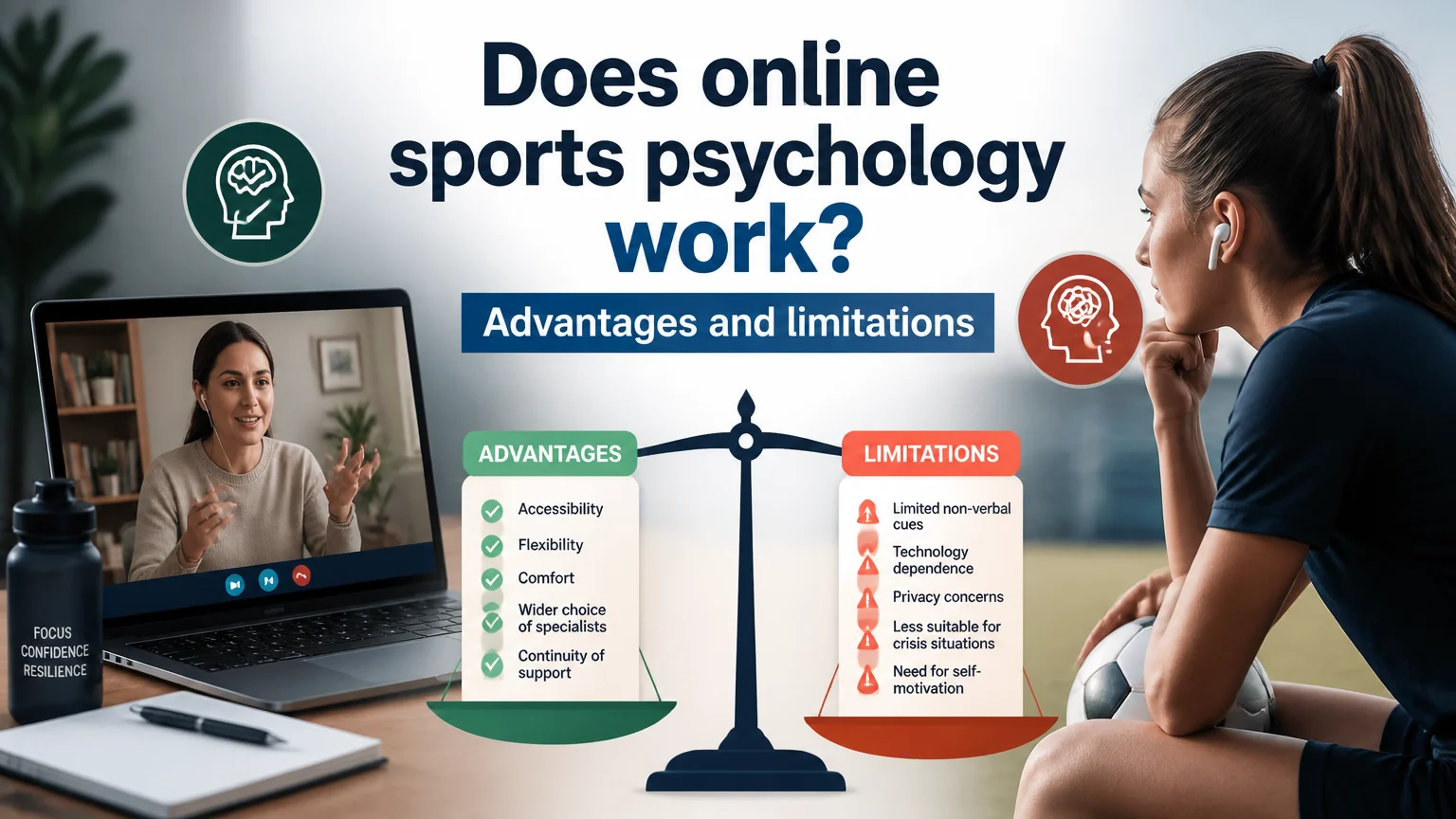
  • Accessibility: allows working with specialists who may not be in your city or country.
  • Continuity during tours and tournaments, reducing interruptions at key moments.
  • Time and logistics savings, fitting better with training schedules.
  • Greater adherence to tasks thanks to reminders and digital materials.
  • Integration with the environment: possibility to include the coach or family when needed.
  • Video analysis via screen sharing to extract specific insights.
  • Less intimidating environments for athletes who open up better from their own space.

Together, these benefits favor consistency, which is one of the most decisive factors for psychological work to have an impact in competition.

Limitations and challenges

  • Limited ability to read nonverbal cues and the athlete's energy.
  • Dependence on technology: connection drops or poor audio interrupt the process.
  • Privacy: holding sessions from locker rooms or shared accommodations can expose conversations.
  • Crisis management: some situations require immediate in-person intervention.

How to mitigate them

  • Use secure platforms and perform technical checks beforehand.
  • Define a “plan B” (phone call or restart) if the connection drops.
  • Establish a safety protocol and local reference contacts.
  • Ensure a private space with headphones and protected timeslots.
  • Combine with occasional in-person sessions when the situation requires it.

What the evidence says

The literature on telepsychology indicates that online interventions in skills such as anxiety management, cognitive restructuring, goal setting and mindfulness show results comparable to face-to-face formats when applied rigorously and adapted to the athlete. In the performance realm, programs that include deliberate practice between sessions tend to maintain or improve effectiveness. The determining factor continues to be the quality of the working alliance, clarity of objectives and consistency in practice, more than the medium itself.

Who it usually works best for and when in-person is advisable

  • Profiles that benefit: athletes with traveling schedules, distributed teams, athletes with prior experience in mental training, and those who prefer logistical flexibility.
  • Cases where in-person is advisable: complex assessments, acute crises, severe difficulties concentrating on screen, minors without adult support and needs that require in-person coordination with medical or technical staff.

Techniques that adapt well to the online format

  • Guided visualization with video review to refine technical and attentional details.
  • Diaphragmatic breathing and arousal regulation with supervised practice.
  • Pre-competition and post-competition routines with shared checklists.
  • Cognitive restructuring and effective self-talk, supported by digital worksheets.
  • Performance-oriented mindfulness and brief between-session exercises.
  • Goal and metric planning, integrated into training logs.

These skills are trained with live demonstrations, brief tasks and immediate feedback, enhancing transfer to training and competition.

Selecting the right professional and signs of quality

  • Accredited training in sport psychology and experience with your discipline.
  • Clear contract covering confidentiality, boundaries and specific objectives.
  • Phased work plan, with progress indicators and periodic review.
  • Ability to coordinate with coaches and medical staff when the athlete authorizes it.
  • Use of secure tools and practical materials adapted to your competitive reality.

Privacy, ethics and legal framework

Working remotely involves securing platforms with encryption, informed consent and responsible data storage. It is key to know where records are stored, which regulations apply (for example, data protection) and to agree on protocols for emergencies. Transparency about these aspects helps build trust and protects both the athlete and the professional.

Practical tips to make the most of it

  • Schedule at a time without training sessions or immediate travel.
  • Use headphones and find a space without interruptions.
  • Keep a brief diary of sensations, training loads and key events of the week.
  • Have videos, metrics and any relevant data on hand.
  • Define a concrete objective per session and a small but specific task.
  • Review at the end what worked and what you'll adjust before the next competition.

If you travel or compete away

  • Plan schedules considering time zones and recovery.
  • Test the connection from the hotel or sports center.
  • Agree on micro-checks of 10-15 minutes for quick adjustments.

Quick FAQs

  • Session duration: usually 45-60 minutes; check-ins, 15-30 minutes.
  • Materials: worksheets, breathing/visualization audios and checklists.
  • Can the coach participate? Yes, when they contribute to the objective and with your consent.
  • Progress: measured with performance indicators, self-reports and observables in competition.
  • Languages and culture: choose someone who understands the context of your sport and circuit.

Conclusion

When designed with purpose, confidentiality is cared for and constant practice is prioritized, remote psychological work can be as effective as face-to-face for improving focus, emotional regulation and confidence under pressure. It is not a magic solution nor suitable for everything, but it offers decisive advantages in access and continuity. The key is choosing the right professional, agreeing on clear objectives and sustaining habits between sessions. With those foundations, the format stops being an obstacle and becomes an ally for performance.

Become an expert in Sports psychology!

Certified Sports Psychology Course: Master the athlete's mind, enhance performance and success — Includes 19 topics and 48 hours of study — only $12

EXPLORE THE COURSE NOW
🎬

Learn with our videos too

Do you prefer learning by watching and listening? Expand your knowledge with these free videos related to this topic.

Hit play and continue learning!
View all videos on this topic

Recent Posts


★