Pre-competition insomnia: sleep hygiene for athletes - sports psychology
Understanding the factors behind sleep disturbances before competitions helps in performance, so look into mental strategies for athletes to prepare both body and mind effectively.
Why it's sometimes hard to sleep before competing
The eve of an important event is a cocktail of excitement, nerves and responsibility. That state of activation helps performance the next day, but it can also sabotage nighttime rest. Understanding what causes it helps manage it better: the sympathetic nervous system is activated, adrenaline and cortisol rise, the mind replays scenarios and mistakes, and any noise feels louder. Sleeping well is not an act of will, but the result of preparing body and brain to switch off.
What happens in the body and mind
- Hyperalertness: the brain interprets the competition as a challenge and delays sleep onset.
- Rumination: repetitive thoughts about performance keep the "mental engine" running.
- Altered rhythms: travel, different schedules and late training shift the biological clock.
- Stimulating behaviors: more caffeine, screens at night and heavy dinners add friction.
How sleeping little affects performance
A single short night won't ruin a season, but it does change critical variables: accuracy, reaction time, decision-making, effort tolerance and pain perception. It also worsens emotional control, increasing the risk of tactical errors. The good news: accumulated rest in the days before and a strategic nap can buffer a single poor night.
Sleep hygiene principles for athletes
Regularity and rhythm
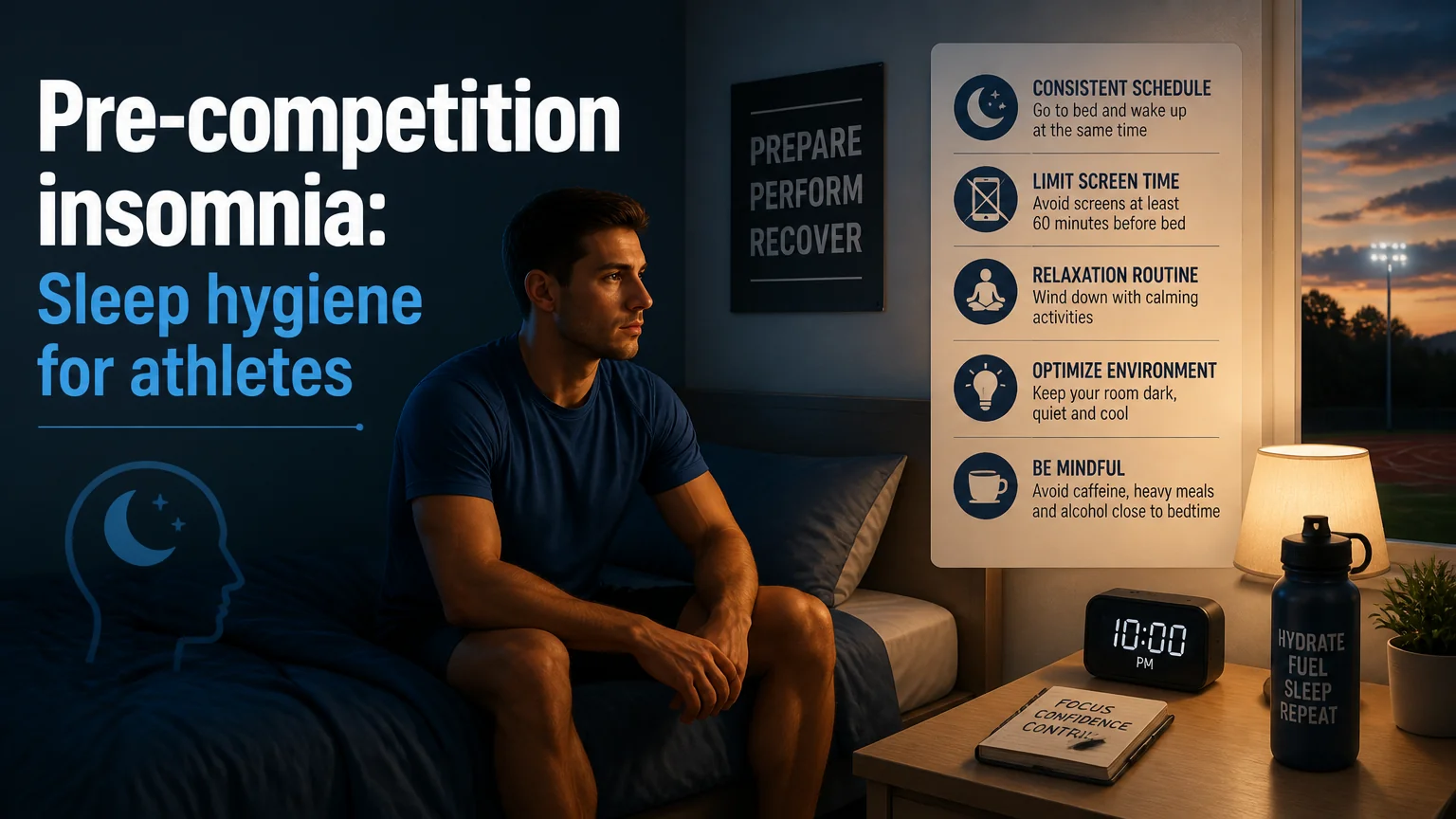
- Consistent schedules: go to bed and get up at similar times, also on days without training.
- Morning light: early sun exposure anchors the biological clock and improves daytime alertness.
- Training: avoid very intense sessions late; if there's no alternative, add more cool-down and relaxation time.
Environment and stimuli
- Darkness and silence: dark room (or eye mask), earplugs if needed and a temperature between 17-20 ºC.
- Bed for sleeping: reserve the bedroom for rest, not for reviewing strategy or social media.
- Screens: limit exposure to blue light 60-90 minutes before bed.
Mental disconnection
- Landing routine: 30-45 minutes of calm, repetitive activities (lukewarm shower, light reading, breathing).
- Offload worries: write down tasks and next-day goals to get them out of your head.
- Breathing and relaxation: practice simple exercises (for example, exhalations longer than inhalations) to activate the parasympathetic system.
Practical plan: the week before
- Prioritize consistency: aim for 7-9 hours per night, adjusting according to your discipline and training volume.
- Build a sleep "reserve": if you expect a short night, add 20-40 extra minutes in the 2-3 days beforehand.
- Reduce caffeine gradually: limit it to the morning and dose according to your sensitivity; avoid it after the early afternoon.
- Train early when possible: and add mobility and breathing work at the end of each session.
- Rehearse the nighttime routine: don't debut it the eve; whatever works, repeat it.
- Eat and drink wisely: light dinner, rich in complex carbohydrates and easy-to-digest proteins; stay well hydrated during the day and reduce fluids in the last two hours to avoid awakenings.
The night before: step-by-step strategy
- Set a cutoff time for screens and mental work: at least 60-90 minutes before bedtime.
- Prepare the next day in advance: gear, bibs, logistics and breakfasts ready before starting the rest routine.
- Lukewarm shower or bath: will favor the drop in core temperature, a signal that promotes sleep.
- Guided relaxation: 4-7-8 breathing, progressive relaxation or a brief body-focused meditation.
- Avoid "checking whether you're asleep": look at the clock as little as possible. If sleep doesn't come within 20-30 minutes, get out of bed and do a quiet activity with dim light until you feel drowsy.
Nutrition, caffeine and safe supplementation
- Dinner: prioritize complex carbohydrates (rice, potato, quinoa) with lean protein and some healthy fats; avoid heavy or spicy sauces.
- Optional late snack: yogurt with fruit, a glass of milk or plant-based drink with cereal; the goal is not to go to bed hungry or overly full.
- Caffeine: useful in competition, but reduce its use in the afternoon-evening; an 8-10 hour caffeine-free window is usually prudent.
- Alcohol: interferes with sleep architecture; better avoid it during the key week.
- Supplements: some people notice benefit from magnesium or low-dose melatonin. Before trying, consult a professional and verify conformity with your sport's regulations.
Travel, time changes and new environments
- Arrive with margin: if you travel, try to reach the destination with time to adapt, especially if there's a time zone change.
- Synchronize light and meals: use the destination's morning sunlight and adjust meal times to align the internal clock.
- Sleep kit: eye mask, earplugs, your usual pillow or cover and an item of clothing with your scent can facilitate continuity of rest.
If sleep doesn't come: in-bed techniques
- Breathe with longer exhalations: for example, inhale 3-4 seconds and exhale 6-8 for several minutes.
- Progressive relaxation: tense and release muscle groups from the feet to the forehead, keeping attention on sensations.
- Guided imagery: visualize a simple, repetitive sequence (a familiar route) focusing on sensory details without judgment.
- Label thoughts: when they appear, mentally note them as "planning" or "worry" and return to the breath.
If the night was bad: how to minimize the impact
- Don't panic: a short night doesn't define your performance; activation can partially compensate.
- Familiar breakfast: avoid experiments, choose tried-and-true options that sit well with you.
- Brief nap: 10-20 minutes between 90 and 150 minutes before the effort can refresh without causing sleep inertia; use an alarm.
- Progressive warm-up: add a few extra minutes so the nervous system reaches the optimal level of activation.
When to consult a professional
If you sleep poorly three or more nights per week for more than a month, if insomnia appears away from competitions, or if you suspect disorders such as apnea, bruxism or restless legs syndrome, seek specialized evaluation. A sleep professional or sports medicine clinician can tailor a personalized plan and rule out underlying causes.
Common mistakes that sabotage rest
- Trying new rituals or supplements the eve before.
- Reviewing tactics or videos just before bed.
- Intense night training without cool-down or subsequent relaxation.
- Compensating with alcohol or sedatives without supervision.
- Obsessing over the exact number of hours, increasing anxiety.
Quick checklist for the eve
- Logistics closed before nightfall.
- Early, light and familiar dinner.
- Screen-free window 60-90 minutes.
- Brief, repeatable relaxation routine.
- Dark, cool and quiet bedroom.
- Plan B if sleep doesn't come: get out of bed and do a quiet activity.
Frequently asked questions
Does a bad night ruin performance?
Not necessarily. Accumulated preparation and the physiological activation on the day of the test usually sustain performance. It's best not to dramatize and to focus on what you can control: warm-up, nutrition, tactics and focus.
Is it advisable to use sleeping pills?
Self-medicating is not a good idea. Some drugs alter coordination and perception the next day. If you consider this option, do it with a professional, with sufficient lead time and respecting your sport's regulations.
Do naps help or harm?
Properly dosed, they help. Keep them short (10-20 minutes) and not too late. If you had a bad night, avoid long naps that make it harder to fall asleep the next night.
Final message
Optimal rest is not improvised: it is trained. The key is to build habits that lower the system's "noise" before sleep, practice an effective routine and have contingency plans for days when nerves tighten. With regularity, an appropriate environment, sensible nutrition and simple relaxation techniques, it's possible to arrive at competition with a clear mind and a ready body, even if the night before wasn't perfect.
 For Onlinecourses55
|
2026-10-05
For Onlinecourses55
|
2026-10-05


![Eating disorders [ed] in weight-class sports](/images/postDuplicados/onlinecourses55-eating-disorders-ed-in-weight-class-sports.webp)