
General Definition of Infectious and Contagious Diseases
Learn how infections spread through intimate contact, nonsexual routes such as blood and shared needles, and mother-to-child transmission to help prevent them.
Watch Video For Onlinecourses55
|
2026-11-09

STIs in Men: Symptoms That Often Go Unnoticed
Men often overlook symptoms; change this narrative by engaging with our practical course on STIs and recognizing signs to maintain optimal health.
Men often downplay or ignore signs in their bodies related to sexual health. Some discomforts seem temporary, others are attributed to friction or aging, and often the issue isn’t discussed due to embarrassment. However, recognizing certain signs early on can make all the difference in preventing complications, transmission, and chronic conditions. Here we describe common and less obvious symptoms, the most common sexual health conditions, and what steps to take when something isn’t working as it used to.
Several reasons explain this lack of attention: social stigma, lack of information, fear of seeing a doctor, the absence of severe pain, and the belief that some signs will go away on their own. Additionally, certain infections may present very mild or atypical symptoms, making them difficult to identify without specific tests. Understanding these barriers helps men stay more alert and act promptly when unusual signs appear.
Shame, toxic masculinity, or inadequate sex education prevent many men from seeking medical care. The fear of being judged by a partner or a healthcare provider also contributes to delays in diagnosis.
Some infections have long incubation periods or intermittent symptoms, and others may present with signs outside the genital area (skin, throat, eyes), so they are not immediately associated with a sexually transmitted infection.
Abnormal penile discharge: whitish, yellowish, or greenish discharge with a strong or persistent odor.
Pain or burning during urination: a burning sensation, frequent urge to urinate, or difficulty starting the stream.
Sores, ulcers, or lumps: lesions on the glans, foreskin, or base of the penis that do not heal within a few days.
Redness, swelling, or unusual tenderness: inflammation of the foreskin or scrotum that alters the appearance or causes pain.
Pain during sexual intercourse or painful ejaculation: discomfort that alters the sexual experience and persists.
Not all symptoms are limited to the genital area. Some diseases present with signs in other parts of the body and, as a result, often go unnoticed as sexually transmitted infections.
Persistent conjunctivitis, especially if it appears after anal or oral sex.
A sore throat that does not respond to standard treatments, particularly after unprotected oral sex.
Spots or rashes on the body, palms of the hands, or soles of the feet that may be associated with syphilis or other conditions.
Fever, severe fatigue, muscle aches, or swollen lymph nodes may accompany more advanced or systemic infections, such as the early stages of HIV or syphilis. These signs require urgent evaluation.
There are several sexually transmitted infections that commonly affect men. Below are descriptions of some of these and the most common symptoms associated with each.
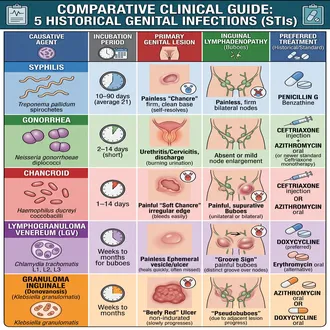
It may be asymptomatic in many men, but when symptoms do appear, they typically include urethral discharge, a burning sensation when urinating, and, in some cases, testicular pain. If left untreated, it can lead to epididymitis and reproductive complications.
It frequently causes a purulent discharge and pain when urinating. Rectal or pharyngeal infection may present with pain, bleeding, or local discharge. Early diagnosis is important due to the risk of spread.
It begins with a painless ulcer at the site of entry (which many people do not notice) and progresses to rashes and systemic symptoms if left untreated. The disease progresses in stages and can cause serious organ damage over time.
It causes small, painful blisters or ulcers in the genital or anal area, accompanied by a burning sensation or itching. Recurrences are common, and the lesions take a long time to heal without treatment.
In men, it usually presents as visible genital warts or is asymptomatic. Some types of HPV are associated with an increased risk of anal or penile cancer over time.
In the first few weeks, there may be flu-like symptoms (fever, sore throat, swollen lymph nodes), but many people remain asymptomatic for years while the virus progresses. Early detection is key to treatment and preventing transmission.
Lack of treatment can lead to serious medical complications: infertility due to damage to the sperm ducts, chronic prostatitis, prolonged pelvic pain, neurological or cardiac complications in advanced syphilis, and an increased risk of HIV transmission. Additionally, a persistent infection makes it easier to transmit the disease to other partners.
See a doctor or visit a health center if you experience any discharge, sores, pain when urinating, or a lump in the testicles.
Request specific tests: urethral swabs, urinalysis, blood tests for syphilis and HIV, and HPV testing as clinically indicated.
Notify recent sexual partners so they can also get tested; many jurisdictions offer anonymous notification services.
Always follow the full course of treatment prescribed by your healthcare provider and avoid sexual intercourse until you have completed treatment and been told it is safe to resume.
Prevention combines education, protective measures, and vaccination when appropriate. Correct and consistent condom use significantly reduces the risk of many infections. The HPV vaccine is recommended and protects against the types that most commonly cause warts and associated cancers.
Have sex only with trusted partners and be aware of each other’s sexual health status.
Get screened regularly if you have multiple partners or engage in unprotected sex.
Avoid self-medicating and seek specialized care if you have any concerns.
Paying attention to signs that are sometimes considered minor can prevent more serious problems. If you notice discharge, pain, sores, or unusual symptoms anywhere on your body, seek medical evaluation without delay. Early detection, appropriate treatment, and communication with partners are essential tools for protecting your sexual health and that of those around you.
Do you prefer learning by watching and listening? Expand your knowledge with these free videos related to this topic.
Learn how infections spread through intimate contact, nonsexual routes such as blood and shared needles, and mother-to-child transmission to help prevent them.
Watch VideoExplore the five classic sexually transmitted infections, their bacterial causes, and how historical classification improved diagnosis and disease control.
Watch VideoLearn why and how HIV, hepatitis, herpes, molluscum, trichomoniasis, scabies, and pubic lice are monitored, including prevalence, detection, and prevention.
Watch VideoSearch
Popular searches